
 Save to Pinterest
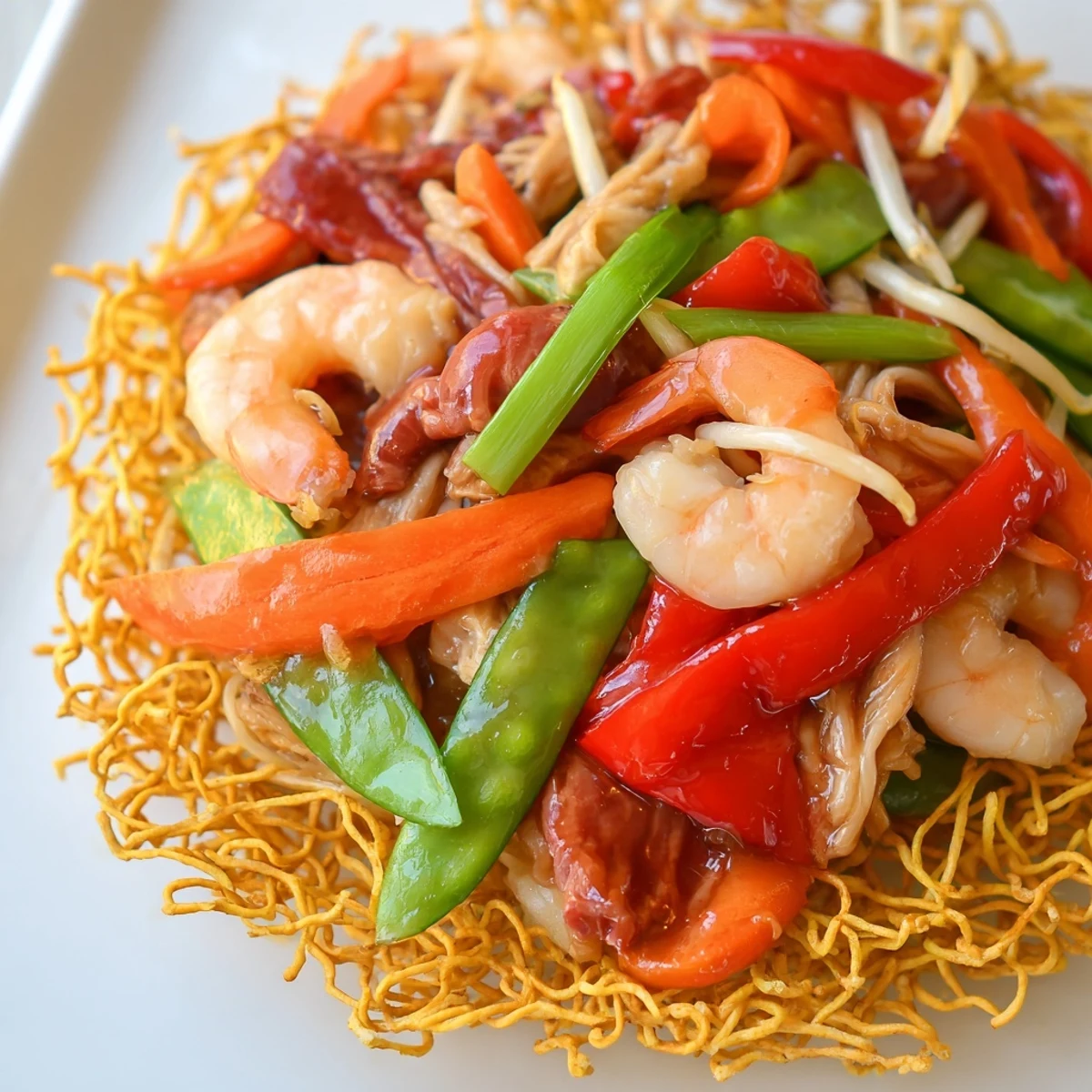
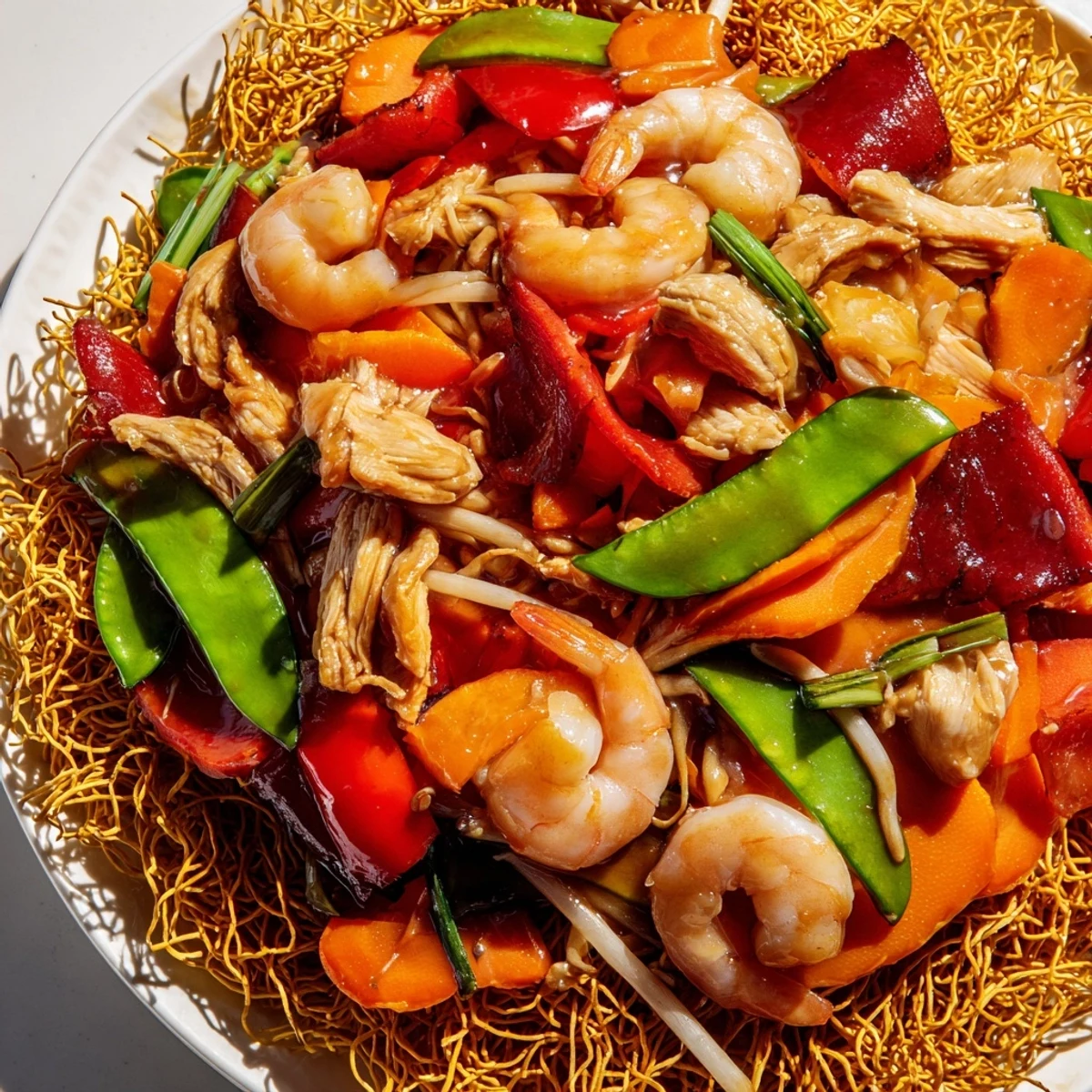
 Experience the authentic flavors of Cantonese cuisine with this classic stir-fried noodle dish. The secret lies in creating perfectly crispy noodles that form a golden base, topped with a colorful medley of tender vegetables and protein. Fresh egg noodles are pan-fried until crunchy, then crowned with succulent chicken, plump shrimp, and sweet char siu pork. The savory sauce brings everything together with balanced umami notes from soy and oyster sauces.
Perfect for family dinners or special occasions, this dish delivers restaurant-quality results in your home kitchen. The contrast between crispy noodles and tender toppings creates an irresistible texture that's both satisfying and delicious.
The first time I attempted Cantonese Chow Mein at home, I ended up with a disappointing pile of soggy noodles despite following the recipe exactly. My friend's grandmother, who ran a small restaurant in Guangzhou for forty years, told me the secret was patience and confidence when crisping the noodles. Now that I've finally mastered the technique, this dish has become my go-to for impressing dinner guests who think takeout is the only option.
Last winter during a particularly brutal storm, my neighbor came over shivering with a bag of leftover roast pork and some sad vegetables from her crisper drawer. We spent the afternoon improvising this recipe together, laughing over glasses of wine while the wok hissed and filled my tiny apartment with the most incredible aromas. That impromptu cooking session saved a dreary snow day and taught me that Chow Mein is actually the perfect vehicle for whatever you need to use up.
Ingredients
- Fresh egg noodles: Fresh noodles crisp up beautifully and hold their structure better than dried ones, but thin Chinese wheat noodles work perfectly too
- Vegetable oil: A neutral high-heat oil is essential for getting that golden crunch without burning
- Chicken breast: Thinly slicing against the grain ensures tender pieces that cook quickly in the hot wok
- Shrimp: Fresh shrimp adds sweetness and a quick-cooking protein element that pairs beautifully with the savory sauce
- Char siu: Chinese BBQ pork brings that authentic restaurant flavor, though roast pork makes a fine substitute
- Carrot and red bell pepper: These add necessary color and a subtle sweetness that balances the salty sauce
- Bean sprouts: The ultimate textural element, bringing crunch and a fresh, clean flavor
- Snow peas: These hold up beautifully to stir-frying and add vibrant green color
- Spring onions: Use both the white and green parts for layers of mild onion flavor
- Light soy sauce: The backbone of the sauce providing saltiness and that deep amber color
- Oyster sauce: This umami-rich ingredient is non-negotiable for authentic Cantonese flavor
- Shaoxing wine: Dry sherry works in a pinch, but Shaoxing wine adds that traditional depth
- Sesame oil: Just a teaspoon at the end adds fragrance and that recognizable nutty finish
- Cornstarch slurry: This is what transforms the sauce from thin and watery to glossy and coating
Instructions
- Marinate the proteins:
- Toss the chicken and shrimp with soy sauce, cornstarch, and white pepper, then let them sit while you prep everything else. This simple step makes such a difference in tenderness and flavor.
- Blanch the noodles:
- Drop fresh noodles into boiling water for just 1 to 2 minutes, then drain them really well. You want them softened but still holding their shape.
- Create the crispy noodle base:
- Heat oil in your wok or skillet, spread the noodles evenly, and let them cook undisturbed for 3 to 4 minutes until golden. Flip carefully and crisp the other side, then transfer to your serving platter.
- Stir-fry the proteins:
- Add fresh oil to the wok and cook the chicken until almost done, then toss in the shrimp until they turn pink. Add the char siu slices to warm through.
- Add the vegetables:
- Toss in carrot, bell pepper, and snow peas, stir-frying for about 2 minutes until they are bright but still crisp. Add bean sprouts and spring onions for just 1 minute so they stay crunchy.
- Make the sauce:
- Combine all sauce ingredients in the wok and let it bubble up. Stir in the cornstarch slurry and watch it transform into a glossy coating sauce.
- Assemble and serve:
- Pour everything over your crispy noodles immediately. The magic happens when that hot sauce hits the crisp base, so serve right away while the texture contrast is at its peak.
 Save to Pinterest
 My father-in-law, who is notoriously picky about Chinese food, actually asked for seconds the first time I made this for Sunday dinner. Hearing him say it reminded him of the Chow Mein from his childhood restaurant in San Francisco's Chinatown made all those weeks of practice absolutely worth it.
Getting The Perfect Noodle Crisp
The secret restaurant technique that changed everything for me is using a nonstick skillet instead of a traditional wok for the noodles. The flat surface helps them brown more evenly and makes flipping much less stressful. I also learned to pat my blanched noodles as dry as possible with paper towels before frying, because any excess water will prevent that gorgeous golden crust from forming properly.
Mastering The Sauce Consistency
I wasted years making Chow Mein with sauce that was either too thin or uncomfortably gloopy before I finally understood the cornstarch trick. Mix your cornstarch with cold water until completely smooth before adding it, and always simmer the sauce for at least 30 seconds after thickening to cook out any raw starch taste. The perfect consistency coats the back of a spoon but still pours easily.
Customizing Your Protein And Vegetables
While the classic combination is wonderful, do not be afraid to swap proteins based on what you have or prefer. Thinly sliced beef, pork tenderloin, or even firm tofu all work beautifully with this sauce base. You can also adjust the vegetables to match the seasons, adding bok choy in winter or sliced summer squash when it is abundant from the garden. Just remember to add harder vegetables first and more delicate ones at the end.
- Cut all your proteins and vegetables to roughly the same size so everything cooks evenly
- Keep the heat high and keep things moving once you start stir-frying
- Never crowd your wok or the ingredients will steam instead of fry
 Save to Pinterest
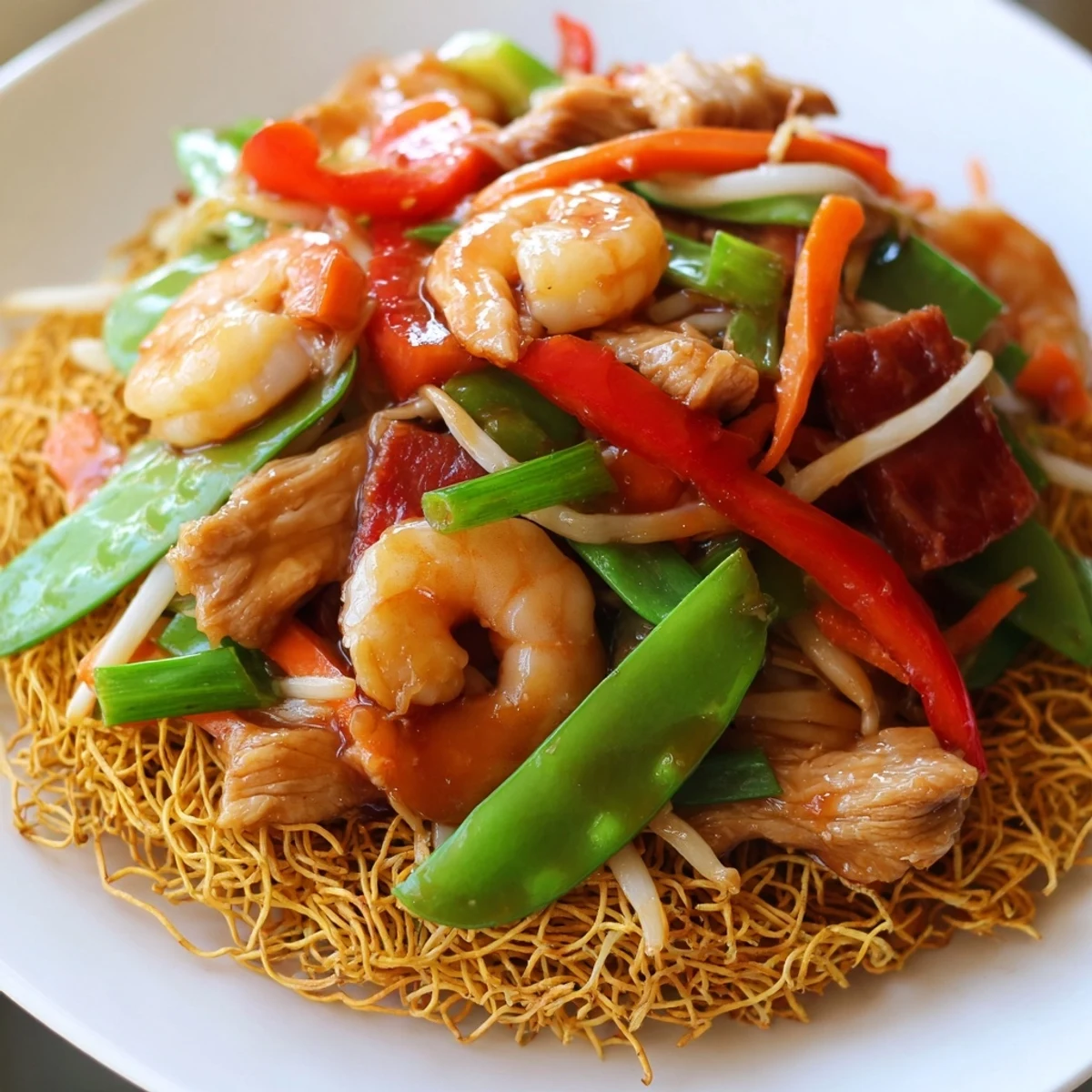
 There is something deeply satisfying about hearing that first crunch of the spoon breaking through the crispy noodles into the saucy toppings beneath. I hope this recipe brings as many joyous meals to your table as it has to mine.
Recipe FAQs
- → What makes Cantonese chow mein different from other stir-fried noodles?
-
The defining characteristic is the crispy noodle base, which is pan-fried until golden and crunchy before being topped with stir-fried ingredients and sauce. This creates a unique texture contrast between the crisp bottom and tender toppings.
- → Can I use dried noodles instead of fresh egg noodles?
-
Yes, dried thin Chinese wheat noodles work well. Cook them according to package directions, drain thoroughly, and pat dry before frying to ensure they crisp up properly in the pan.
- → How do I prevent the noodles from becoming soggy?
-
Ensure noodles are well-drained and slightly cooled before frying. Cook them undisturbed over medium-high heat to develop a crisp base, and add the sauce just before serving rather than tossing everything together.
- → What proteins work best in this dish?
-
Traditional combinations include chicken, shrimp, and char siu. You can substitute with sliced pork, beef, or firm tofu. For seafood lovers, scallops or squid make excellent additions.
- → Is this dish suitable for meal prep?
-
The topping ingredients can be prepared ahead, but for best results, fry the noodles fresh just before serving. If storing, keep noodles and topping separate, then reheat noodles in a hot pan to restore crispiness.
- → What vegetables can I add or substitute?
-
Bok choy, Chinese cabbage, mushrooms, bamboo shoots, or baby corn are traditional options. Adjust based on availability and preference, maintaining a mix of colors and textures.