
 Save to Pinterest
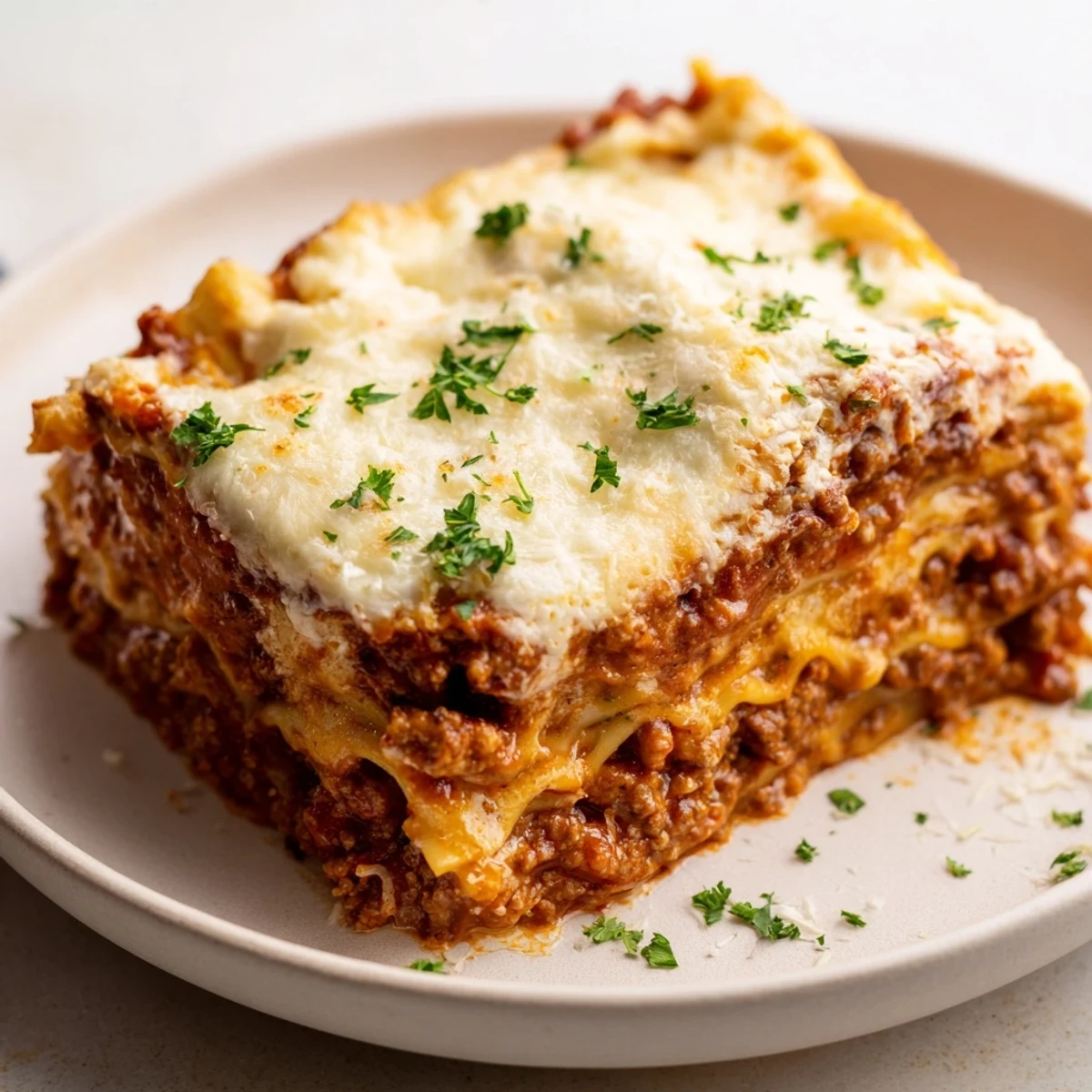
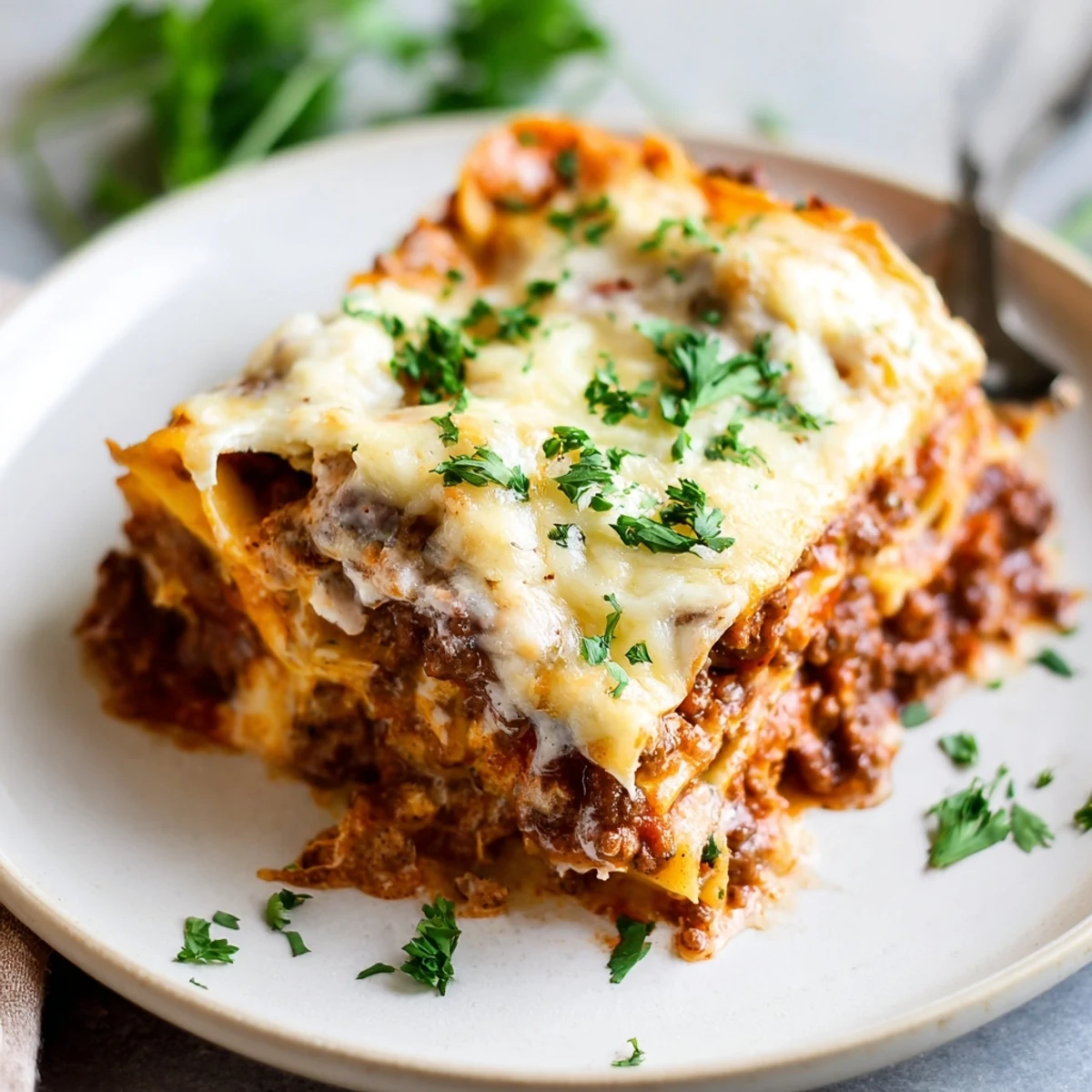
 This Italian favorite features hearty ground beef simmered in a flavorful marinara sauce, layered with creamy ricotta and mozzarella cheeses, and tender sheets of pasta. The dish bakes to a golden, bubbly finish, balancing robust herbs and spices for a comforting meal. Allow it to rest before serving to enhance the flavors and texture, making it perfect for gatherings or family meals.
My nonna used to say that lasagna was the dish that proved you loved someone, and honestly, she was onto something. There's something about layering pasta, meat sauce, and cheese that feels like you're building edible architecture, each stratum a promise of comfort. The first time I made this version, I was trying to impress someone special, and halfway through assembling it, I realized I'd forgotten to cook the noodles. But that mistake taught me something valuable: the ritual of making lasagna matters just as much as the final result.
I made this for my book club one winter, and someone asked if I'd used store-bought sauce—the look on their face when I said no was worth every minute of chopping onions and garlic. That's when I understood that homemade marinara isn't just about taste; it's about the small gesture of time given to people you care about.
Ingredients
- Olive oil (2 tablespoons): Use good quality here because you'll taste it in the sauce base, and it makes a real difference in depth.
- Onion and garlic: These are your flavor foundation—don't rush chopping them finely, as it helps them dissolve into silky sweetness.
- Crushed tomatoes (two 28 oz cans): San Marzano varieties are ideal, but honestly, any good crushed tomato works if it's your pantry staple.
- Tomato paste (2 tablespoons): This concentrate adds umami and body that canned tomatoes alone can't quite reach.
- Oregano and basil (1 teaspoon each, dried): Fresh herbs are lovely, but dried actually performs better here because the long simmer seasons evenly.
- Sugar (1 teaspoon): This balances acidity without making the sauce taste sweet—it's a quiet hand that guides the whole flavor.
- Red pepper flakes (1/2 teaspoon, optional): Add this only if you like a whisper of heat that builds gently with each bite.
- Ground beef (1 1/2 pounds, 80/20 blend): The fat content matters because it keeps the meat tender and flavorful rather than dry and grainy.
- Nutmeg (1/4 teaspoon, ground): A tiny pinch sounds strange, but it's the secret that makes people ask what your special ingredient is.
- Ricotta cheese (15 oz): Cold ricotta straight from the fridge makes it easier to spread smoothly between layers.
- Parmesan cheese (1/2 cup, grated): Freshly grated tastes night-and-day better than pre-shredded, which contains anti-caking agents.
- Mozzarella cheese (2 cups, shredded): Use part-skim mozzarella if you want less greasiness on top, or whole milk for maximum stretch and bubble.
- Lasagna noodles (12 regular or oven-ready): Oven-ready saves a step, but regular noodles give you more control and a slightly firmer bite.
- Egg (1 large): This binds the ricotta layer and adds richness that makes it hold together beautifully when you slice.
Instructions
- Start your sauce foundation:
- Pour olive oil into a large saucepan and let it warm over medium heat until it shimmers slightly. Add your finely chopped onion and let it cook until the edges turn golden and it smells sweet, about 5 minutes. Stir in minced garlic and wait just a minute for that raw bite to mellow.
- Build the marinara:
- Add both cans of crushed tomatoes, the tomato paste, sugar, oregano, basil, red pepper flakes if using, salt, and pepper. Let it bubble gently and simmer uncovered for 25 to 30 minutes, stirring occasionally, until the sauce thickens and tastes rich rather than bright. Taste and adjust seasonings—it should taste like concentrated, savory tomato.
- Brown and meld the beef:
- In a large skillet over medium-high heat, crumble the ground beef and cook it with salt, pepper, and nutmeg, breaking it into small pieces as it browns, about 7 to 8 minutes. Once the meat is no longer pink, drain off excess fat using a colander or paper towel trick. Stir in 2 cups of your finished marinara and let it simmer together for 5 minutes so the flavors marry.
- Prepare your cheese mixture:
- In a mixing bowl, combine cold ricotta, one raw egg, and grated Parmesan cheese. Mix until you have a uniform texture that's spreadable but still holds shape. This only takes a minute or two by hand; don't overwork it.
- Cook or prepare your noodles:
- If using regular lasagna noodles, bring a large pot of salted water to a rolling boil and cook them according to package directions, usually 8 to 10 minutes. Drain carefully and lay them flat on clean kitchen towels so they don't stick together.
- Layer with intention:
- Preheat your oven to 375°F. Spread about 1 cup of plain marinara sauce on the bottom of a 9x13-inch baking dish. Lay 4 noodles across the sauce, slightly overlapping, then spread half of your ricotta mixture evenly over them. Scatter half of the beef mixture over the ricotta, then sprinkle with about 2/3 cup of shredded mozzarella.
- Build the second layer:
- Repeat: another layer of 4 noodles, remaining ricotta, remaining beef, and another 2/3 cup mozzarella. Top with the final 4 noodles, spread the remaining marinara sauce over them, and finish with the last handful of mozzarella cheese. This creates a cheese-and-sauce top that will turn golden and crispy.
- Bake to golden perfection:
- Cover the baking dish loosely with aluminum foil, tenting it so it doesn't touch the cheese layer. Bake for 25 minutes covered. Remove the foil and bake another 20 minutes until the top is bubbling at the edges and golden brown. Let it rest for 15 minutes before slicing—this lets everything set so each piece holds together gracefully.
 Save to Pinterest
 I'll never forget the quiet moment after my daughter took her first bite and closed her eyes like she'd been transported somewhere wonderful. That's when I stopped worrying about whether my homemade sauce was perfect enough.
Why Homemade Sauce Tastes Different
There's a real difference between jarred marinara and something you've made yourself, and it isn't just sentimentality. When you sauté your onion and garlic in olive oil first, you're creating a base layer of flavor that canned sauces can't quite replicate. The long simmer lets those dried herbs soften and distribute evenly, and the sugar isn't competing with preservatives or stabilizers.
The Secret of Temperature and Timing
Lasagna is surprisingly forgiving if you understand that the oven finish is what matters most. The foil covering protects your cheese from browning too fast while the inside continues cooking, and removing it at the right moment gives you that golden, bubbly top that everyone reaches for. I've learned that a slightly hotter oven bakes faster but risks drying the noodles, while a gentler temperature takes longer but gives you more control.
Making It Your Own
This recipe is a framework, not a prison. I've added everything from a splash of red wine to the marinara to swapping ground turkey for beef when I wanted something lighter. Some people layer fresh spinach between the cheese for color and nutrition, while others add fresh basil in the final assembly. The beauty of lasagna is that it rewards experimentation because all those bold flavors work together harmoniously.
- Try adding a handful of sautéed mushrooms to your beef layer for earthiness and depth without changing the structure.
- If your marinara tastes too acidic, stir in a pinch more sugar or a small knob of butter to round it out.
- Oven-ready noodles are a time-saver, but regular noodles cooked to just-tender give you better control and texture.
 Save to Pinterest
 Lasagna is one of those dishes that teaches you something new every time you make it. Whether it's perfecting your sauce rhythm or discovering a flavor combination that feels entirely your own, this is a recipe worth returning to again and again.
Recipe FAQs
- → How do I make the marinara sauce flavorful?
-
Sauté onions and garlic until soft, then simmer crushed tomatoes with tomato paste, oregano, basil, and a pinch of sugar. Let it cook uncovered to thicken, enhancing the depth of flavor.
- → Can I substitute the ground beef with other meats?
-
Yes, ground turkey or pork work well as alternatives, adjusting cooking times slightly to maintain juiciness and flavor.
- → What’s the best way to cook the pasta sheets?
-
Boil regular lasagna noodles in salted water until al dente, then drain and cool on a towel. Oven-ready noodles can be used to save time without pre-cooking.
- → How should the layers be assembled for best results?
-
Start with a layer of sauce, then alternate noodles with cheese mixture and beef ragù. Repeat layers evenly and finish with sauce and shredded mozzarella for a bubbly top.
- → What are tips for baking this dish effectively?
-
Cover with foil to keep moisture during the first part of baking, then remove foil to brown the cheese. Let it rest after baking for cleaner slices.