
 Save to Pinterest
 This dish features a whole duck seasoned with Chinese five-spice, salt, and pepper, then stuffed with garlic, ginger, and scallions. Slow roasted at moderate heat before a final high-temperature glaze using soy sauce, honey, and rice vinegar creates an irresistible crispy skin. Resting the bird brings out juicy, tender meat complemented by optional accompaniments like Mandarin pancakes and fresh vegetables, ideal for a special occasion or cozy dinner.
The first time I roasted a whole duck at home, I was terrified I'd ruin it. My grandmother had made it look effortless, but when that bird came out of the oven with skin so crispy it practically shattered under the knife, I understood why she'd always seemed so proud. Now, whenever I make this, I'm transported back to her kitchen, the smell of five-spice and honey filling the air while she'd tell me the secret wasn't fancy technique—it was patience and not being afraid to get messy.
I remember cooking this for my partner's parents on their first visit to our apartment, watching their faces as they bit into it and immediately asked for the recipe. That moment when someone's eyes light up over food you've made—that's when cooking stops being a chore and becomes pure joy.
Ingredients
- 1 whole duck (about 2 kg), cleaned and patted dry: Pat it completely dry; any moisture left on the skin will steam instead of crisp, and you'll regret it halfway through roasting.
- Chinese five-spice powder: This blend of star anise, cinnamon, Sichuan pepper, cloves, and fennel creates that deep, complex flavor that makes people ask what your secret ingredient is.
- Sea salt and ground black pepper: Don't skip seasoning the cavity—it seasons the meat from the inside out and makes every bite better.
- Fresh garlic, ginger, and scallions: These aromatic stuffing ingredients perfume the bird as it cooks and add subtle flavor to the meat without being overwhelming.
- Soy sauce, honey, and rice vinegar: This glaze is your ticket to that mahogany-brown, glossy finish that catches the light and looks restaurant-worthy.
- Mandarin pancakes or steamed buns: They're optional but honestly make the whole experience feel special, like you're at a dim sum restaurant.
- Cucumber and scallions for serving: The fresh crunch and slight bitterness cut through the richness of the duck beautifully.
- Hoisin or plum sauce: The finishing touch that ties everything together—pick whichever you have or whichever calls to you.
Instructions
- Set your oven and prep the duck:
- Preheat to 160°C and remove any excess fat from the cavity by hand—this helps the skin crisp instead of turning greasy. Pat the duck completely dry with paper towels, getting into all those crevices.
- Build your spice armor:
- Mix the five-spice powder, salt, and pepper in a small bowl, then rub it generously all over the duck—the skin, under the wings, everywhere. Don't forget inside the cavity; this is where the magic starts.
- Stuff and position:
- Stuff the cavity with crushed garlic, sliced ginger, and large scallion pieces, then place the duck breast-side up on a wire rack in your roasting pan. The rack keeps it elevated so hot air circulates underneath and crisps everything evenly.
- The slow roast:
- Roast for 1 hour at the lower temperature. You're rendering the fat slowly, letting it drip away while the skin stays tender enough to absorb flavor.
- Make your glaze:
- While the duck cooks, whisk together soy sauce, honey, and rice vinegar in a small bowl. The honey caramelizes in the oven, the soy adds umami depth, and the vinegar cuts through richness.
- The crispy finish:
- After 1 hour, bump the oven to 220°C and brush the duck all over with your glaze. Return it for 20–30 minutes, basting once more halfway through—you're looking for deep golden-brown skin that crackles when you touch it.
- Rest and carve:
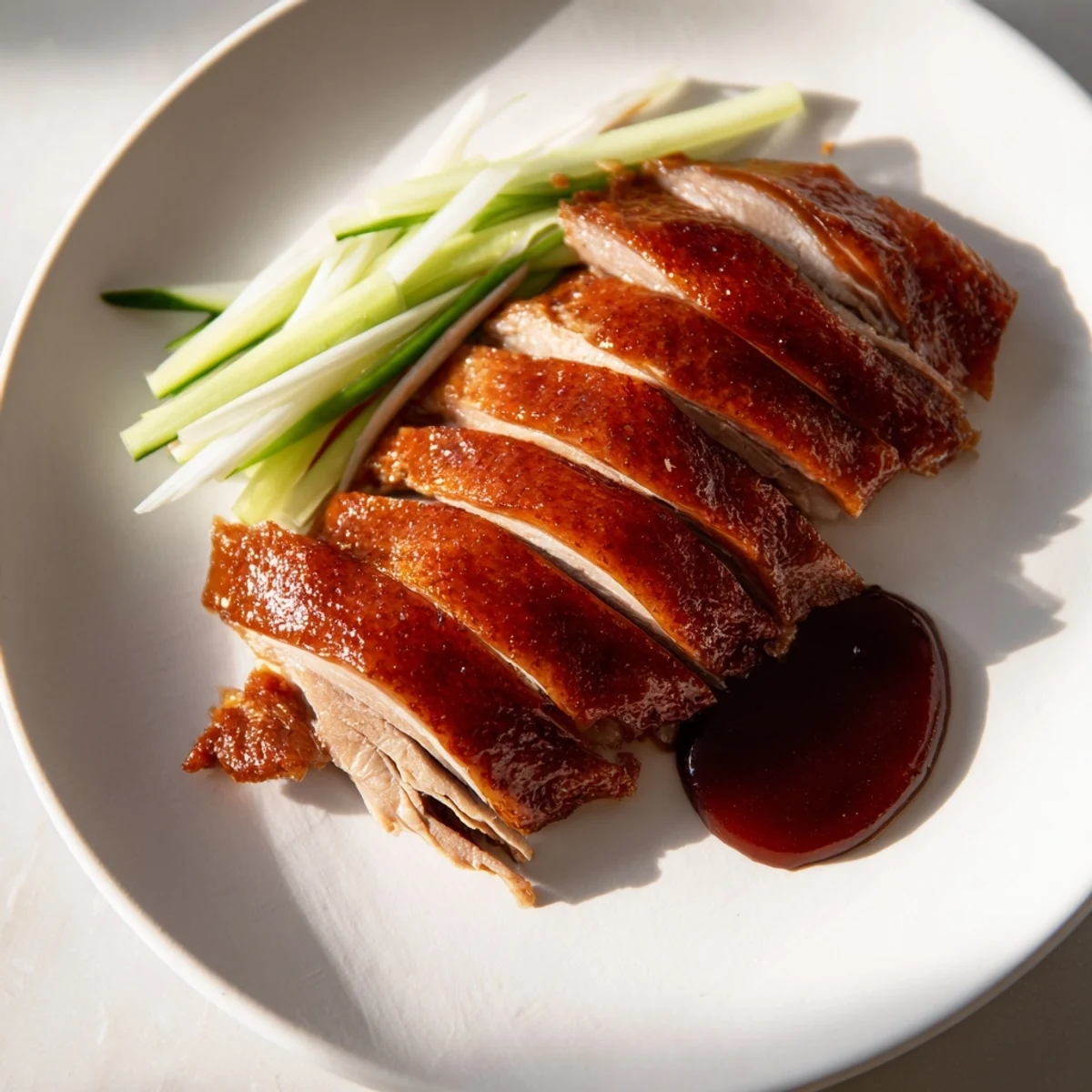
- Let the duck rest for 10 minutes after pulling it from the oven; this keeps the juices from running out onto your cutting board. Then slice it with a sharp knife and arrange it on a platter.
- Plate and serve:
- Arrange the duck alongside warm pancakes or buns, fresh cucumber julienne, scallion strips, and a small bowl of hoisin or plum sauce. Let everyone build their own bites.
 Save to Pinterest
 There's something deeply satisfying about carving a duck at the table, hearing the skin crackle as the knife cuts through it, everyone reaching for the first pieces. It's the kind of dish that makes an ordinary dinner feel like an occasion.
Why This Recipe Works
The two-temperature roasting method—low and slow to render fat, then high heat to crisp the skin—is the real game-changer here. Most home cooks either get the skin right and the meat dry, or vice versa, but this approach gives you both. The five-spice rub adds layers of warmth without being aggressive, and the aromatics stuffed inside the cavity make the meat taste like you've been simmering it in broth for hours when really you just set it and forgot about it.
How to Make It Your Own
While this recipe is delicious as written, I've found that a few small tweaks can push it even further. If you love heat, add a pinch of white pepper or a touch of chili flake to the spice rub. If you want a deeper color, brush the duck with a little soy sauce 10 minutes before it's done. And if you're feeling adventurous, swap the rice vinegar for black vinegar for a more complex, slightly smoky glaze.
Timing and Serving Tips
The beauty of this recipe is that you can time it so the duck is ready exactly when you want to eat. If your guests will be late, slow-roast it for an extra 15 minutes at 160°C instead, then crank the heat at the last minute. Serve it warm, not hot—the flavors open up and the meat stays more tender when it's just above room temperature. Pair it with a light, fruity red wine like Pinot Noir or even a dry rosé; the acidity complements the richness beautifully.
- Have all your serving components prepped and ready before the duck comes out of the oven so nothing gets cold while you're carving.
- Leftover duck is incredible shredded and mixed into fried rice the next day.
- If your skin doesn't crisp as much as you'd hoped, it still tastes amazing and the mistake teaches you something for next time.
 Save to Pinterest
 Cooking a whole duck might feel intimidating at first, but it's actually one of those dishes that rewards you for trying. Once you nail it, you'll find yourself making it again and again, each time feeling a little more confident, a little more like someone who knows their way around a kitchen.
Recipe FAQs
- → How do I achieve extra crispy duck skin?
-
Prick the skin carefully before roasting to release fat and ensure crispiness without piercing the flesh.
- → Can the five-spice powder be substituted?
-
While five-spice adds authentic aromatic flavor, a mix of star anise, cinnamon, cloves, fennel, and Szechuan pepper can substitute individually.
- → What is the purpose of basting with the honey-soy mixture?
-
Basting during the final roasting phase caramelizes the skin, adding a sweet-savory glaze that enhances crispness and flavor.
- → How long should the duck rest after roasting?
-
Let the duck rest for about 10 minutes to redistribute juices and maintain moist meat when carving.
- → Are Mandarin pancakes necessary for serving?
-
They are optional but provide a soft, delicate complement to the richly flavored duck and fresh garnishes.