
 Save to Pinterest
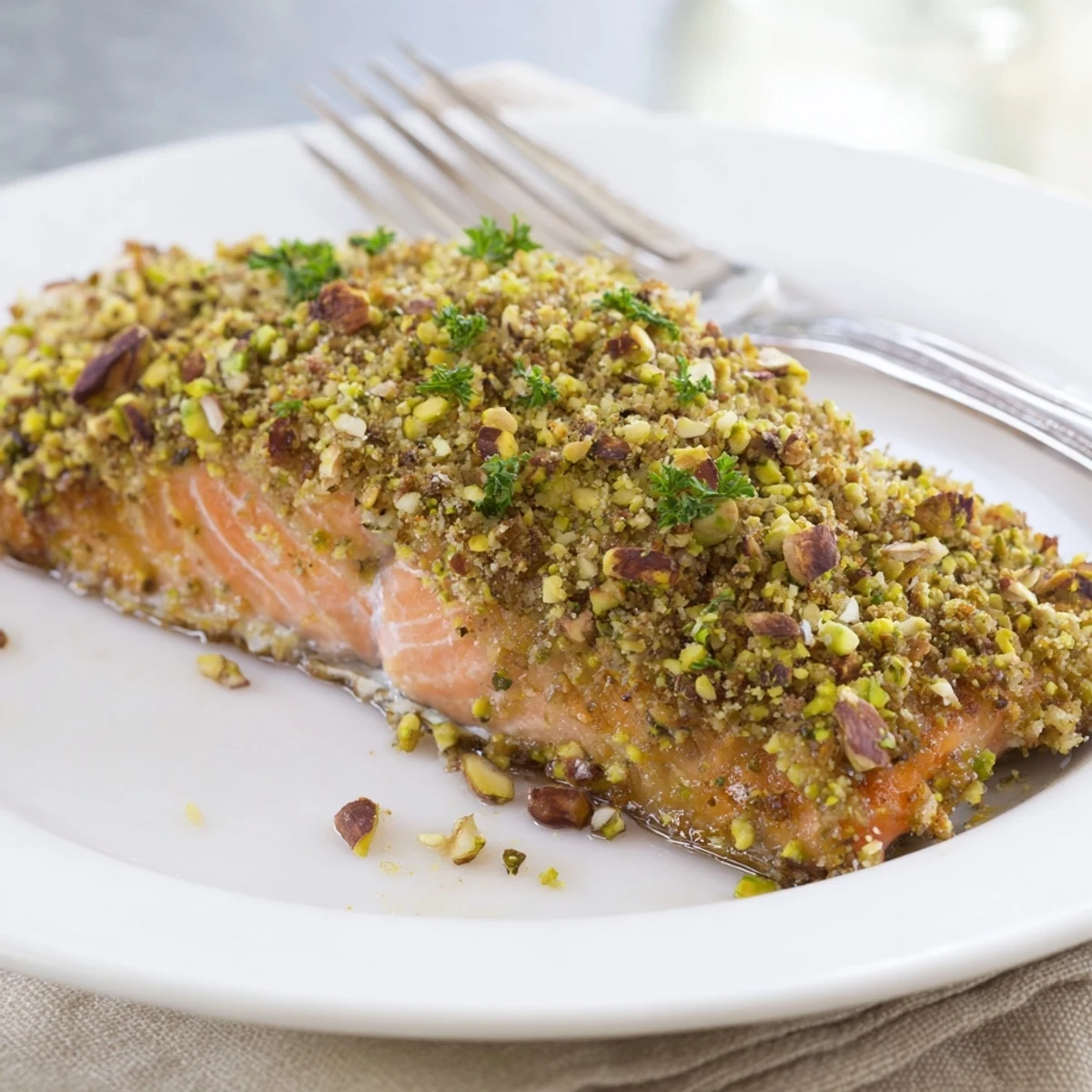
 This maple pistachio salmon brings together the richness of fresh Atlantic salmon with a sweet maple-mustard glaze that caramelizes beautifully in the oven.
The chopped pistachio crust adds a satisfying crunch and nutty depth that pairs perfectly with the natural oils of the fish.
Ready in just 30 minutes with only 10 minutes of prep, it's an ideal choice for both busy weeknights and casual dinner parties.
Serve alongside roasted vegetables, fluffy quinoa, or a crisp green salad for a complete, gluten-free meal that's as nutritious as it is delicious.
The smell of maple syrup caramelizing against salmon is one of those kitchen surprises that stops you mid sentence. I stumbled onto this combination one Tuesday when the only things in my pantry were a bottle of syrup leftover from pancakes and a bag of pistachios I kept forgetting to snack on. Twenty minutes later I was standing at the counter eating straight off the baking sheet because plating felt like a waste of time. That crunchy sweet nutty crust on buttery fish is now a nonnegotiable in my weekly rotation.
I made this for my neighbor Sarah after she helped me carry groceries up three flights of stairs in the rain. She stood in my kitchen still damp, fork in hand, and said nothing for a full minute before asking if I would make it every week forever.
Ingredients
- 4 salmon fillets, about 170 g each, skin removed: Try to buy fillets of similar thickness so they finish cooking at the same time and nobody gets a dry piece.
- 3 tablespoons pure maple syrup: Use the real stuff, not pancake syrup, because the artificial kind burns in the oven and tastes flat against the fish.
- 2 tablespoons Dijon mustard: This adds a subtle heat that balances the sweetness and helps the glaze adhere to the salmon.
- 1 tablespoon olive oil: Keeps the fish moist and carries flavor across the surface during baking.
- 1 tablespoon lemon juice: A squeeze of brightness that cuts through the richness of both the salmon and the nuts.
- Salt and freshly ground black pepper, to taste: Season the fish before glazing so every layer has dimension.
- 1/2 cup shelled unsalted pistachios, roughly chopped: Rough chops give better texture than fine crumbs, leaving some bigger pieces for satisfying crunch.
- 2 tablespoons panko or gluten-free breadcrumbs: Optional, but they fill in the gaps between pistachio pieces and create a more even crust.
- 1 teaspoon lemon zest: This is different from the juice, adding concentrated floral citrus oils that wake up the whole dish.
- 1 tablespoon fresh parsley, finely chopped: Purely optional, but it adds flecks of green that make the golden crust look beautiful on the plate.
Instructions
- Get the oven ready:
- Preheat to 200 degrees Celsius, or 400 degrees Fahrenheit, and line a baking sheet with parchment paper. This prevents the glaze from sticking and makes cleanup almost effortless.
- Whisk the glaze:
- In a small bowl, stir together the maple syrup, Dijon mustard, olive oil, lemon juice, a pinch of salt, and a few grinds of pepper until smooth. Taste it with your finger and adjust if you want it sweeter or more mustardy.
- Build the crust mixture:
- In a separate bowl, toss the chopped pistachios with panko breadcrumbs if you are using them, lemon zest, and parsley. Use your hands to combine so the zest oils distribute evenly through the nuts.
- Prep the salmon:
- Pat each fillet dry with paper towels and lay them on the baking sheet with space between them. Dry fish means the glaze sticks instead of sliding off into a puddle.
- Brush on the glaze:
- Use a pastry brush to coat the top and sides of each fillet generously with the maple mustard mixture. Do not be shy, a thick layer is what gives you that lacquered finish.
- Press on the crust:
- Spoon the pistachio mixture over each glazed fillet and press it down gently with your palms. The glaze acts as glue, so press firmly enough that the nuts stay put when you move the tray.
- Bake until golden:
- Slide the tray into the oven and bake for 15 to 20 minutes until the salmon is opaque and flakes easily with a fork. The crust should be golden brown and your kitchen should smell incredible.
- Serve right away:
- Transfer each fillet to a plate and serve with roasted vegetables, quinoa, or a simple green salad while the crust is still crisp. The crust softens as it sits, so timing matters here.
 Save to Pinterest
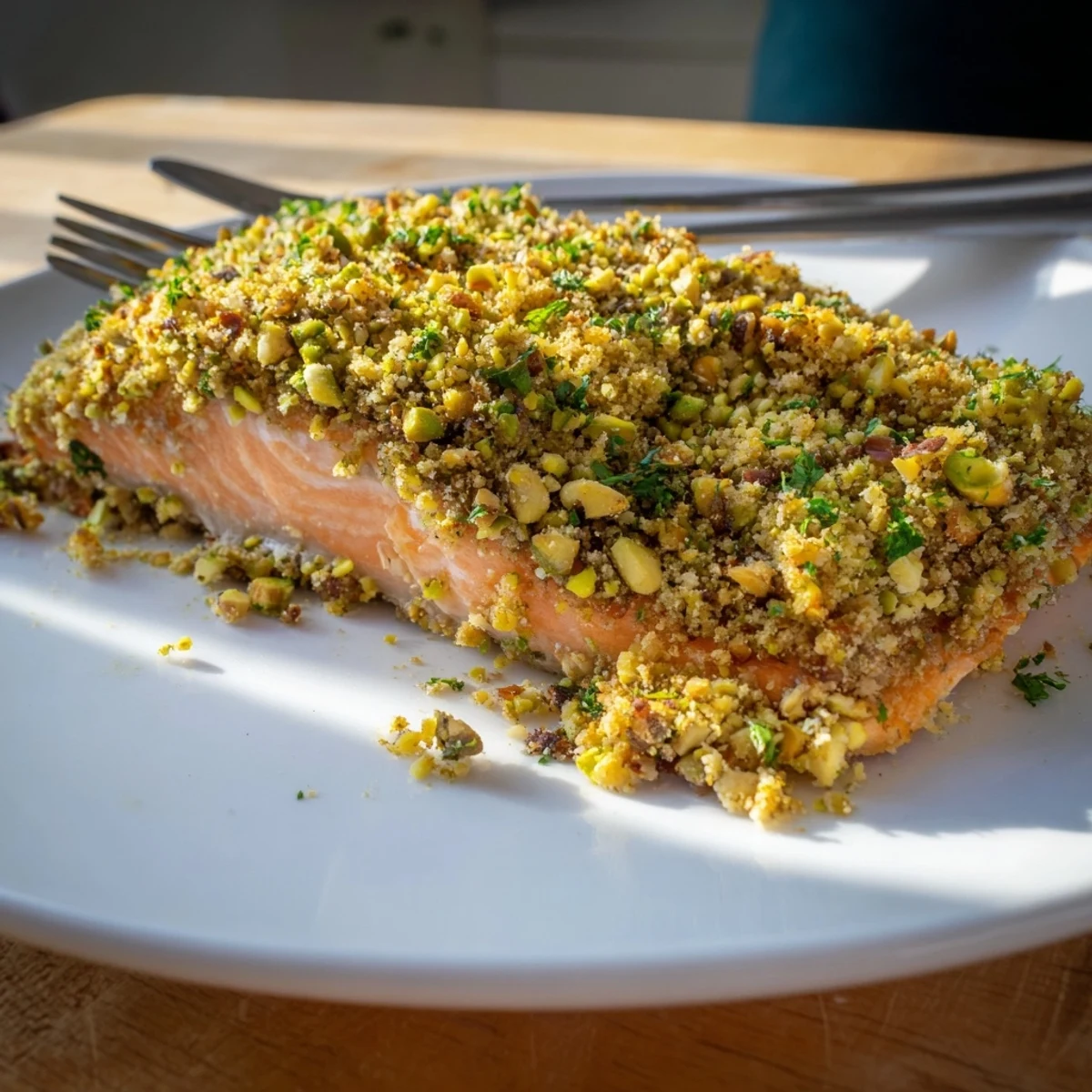
 There is something about pulling a tray of golden crusted salmon from the oven that makes a random weeknight feel like a celebration.
What to Serve Alongside It
I usually roast whatever vegetables are languishing in my crisper drawer with nothing more than olive oil and salt. Broccoli and carrots get beautifully caramelized edges in the same 20 minutes the salmon needs, which means you can toss them on a second tray and everything finishes together without any juggling.
Wine Pairing Thoughts
A crisp Sauvignon Blanc cuts right through the sweetness of the maple glaze and refreshes your palate between bites. If you prefer something richer, an oaked Chardonnay mirrors the buttery texture of the salmon and makes the whole meal feel a bit more indulgent.
Leftovers and Reheating
Cold leftover salmon on top of a grain bowl the next day is honestly almost as good as the hot dinner version. The crust loses its crunch in the fridge, but the flavor deepens overnight and tastes incredible crumbled over a salad with a drizzle of olive oil.
- Store leftovers in an airtight container and eat within two days for the best texture.
- Reheat gently in a low oven around 150 degrees Celsius to avoid drying out the fish.
- Never microwave the crust unless you enjoy chewing on soggy nuts, which nobody does.
 Save to Pinterest
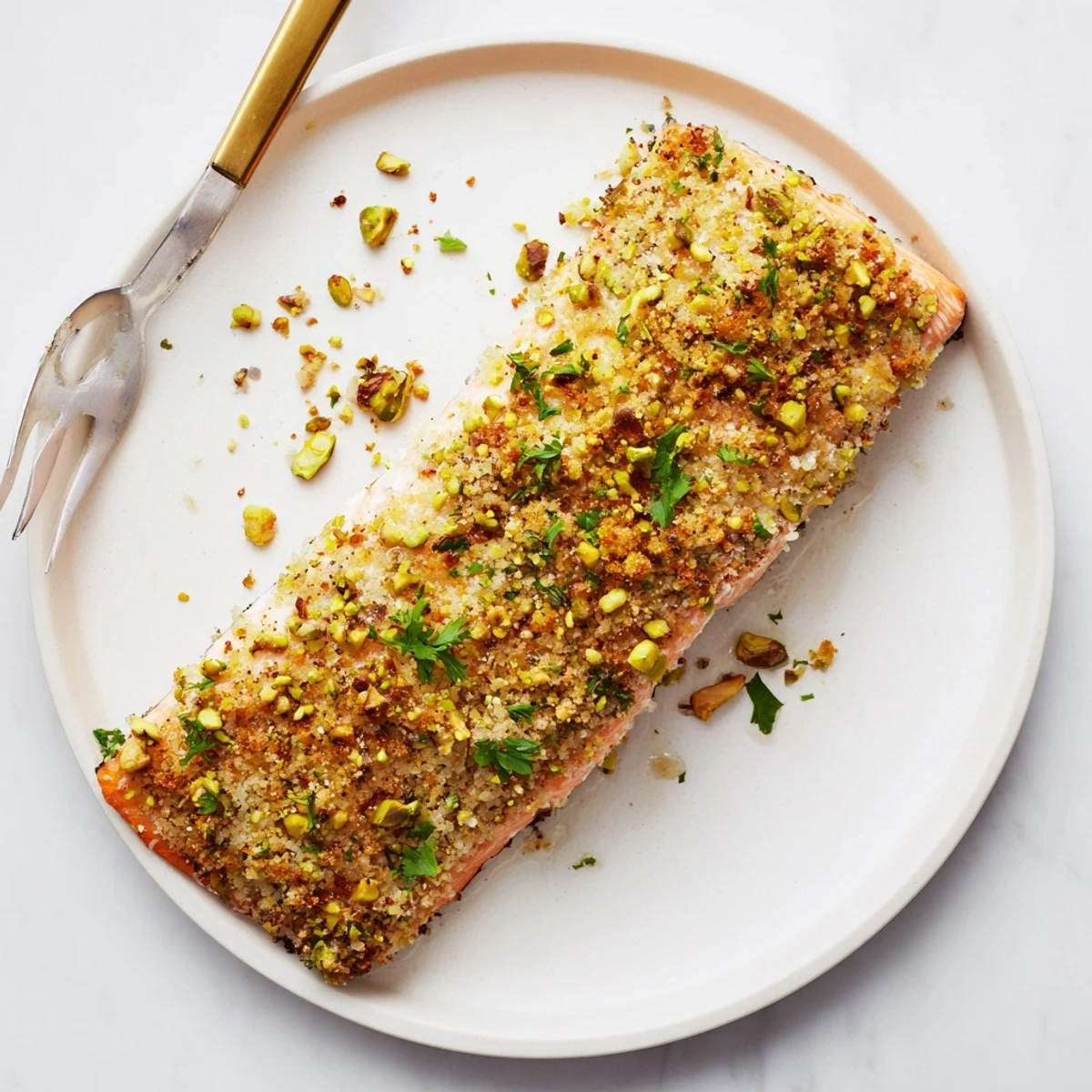
 This recipe lives in that sweet spot where minimal effort meets maximum reward, and that is exactly the kind of cooking worth holding onto.
Recipe FAQs
- → Can I use frozen salmon fillets instead of fresh?
-
Yes, frozen salmon works well. Thaw it completely in the refrigerator overnight, then pat the fillets thoroughly dry with paper towels before applying the glaze to ensure proper adhesion.
- → What can I substitute for pistachios if I have a nut allergy?
-
Toasted sunflower seeds or pumpkin seeds make excellent nut-free alternatives. They provide a similar crunch and earthy flavor while keeping the dish allergy-friendly.
- → How do I know when the salmon is fully cooked?
-
The salmon is done when it turns opaque throughout and flakes easily when gently pressed with a fork. An internal temperature of 63°C (145°F) indicates it's perfectly cooked and safe to eat.
- → Can I prepare the glaze and crust ahead of time?
-
Absolutely. The maple-mustard glaze can be mixed and refrigerated for up to 3 days. The pistachio crust mixture can also be prepped in advance and stored in an airtight container at room temperature.
- → What side dishes pair best with this salmon?
-
Roasted asparagus, garlic mashed potatoes, lemon herb couscous, or a mixed greens salad with vinaigrette all complement the sweet and nutty flavors beautifully. A crisp Sauvignon Blanc or buttery Chardonnay makes a lovely wine pairing.
- → Can I cook this on the stovetop instead of baking?
-
Yes, sear the salmon skin-side down in an oven-safe skillet for 3 minutes, then transfer to a 200°C oven to finish cooking. This method gives you a nice sear while still allowing the pistachio crust to golden properly.