 Save to Pinterest
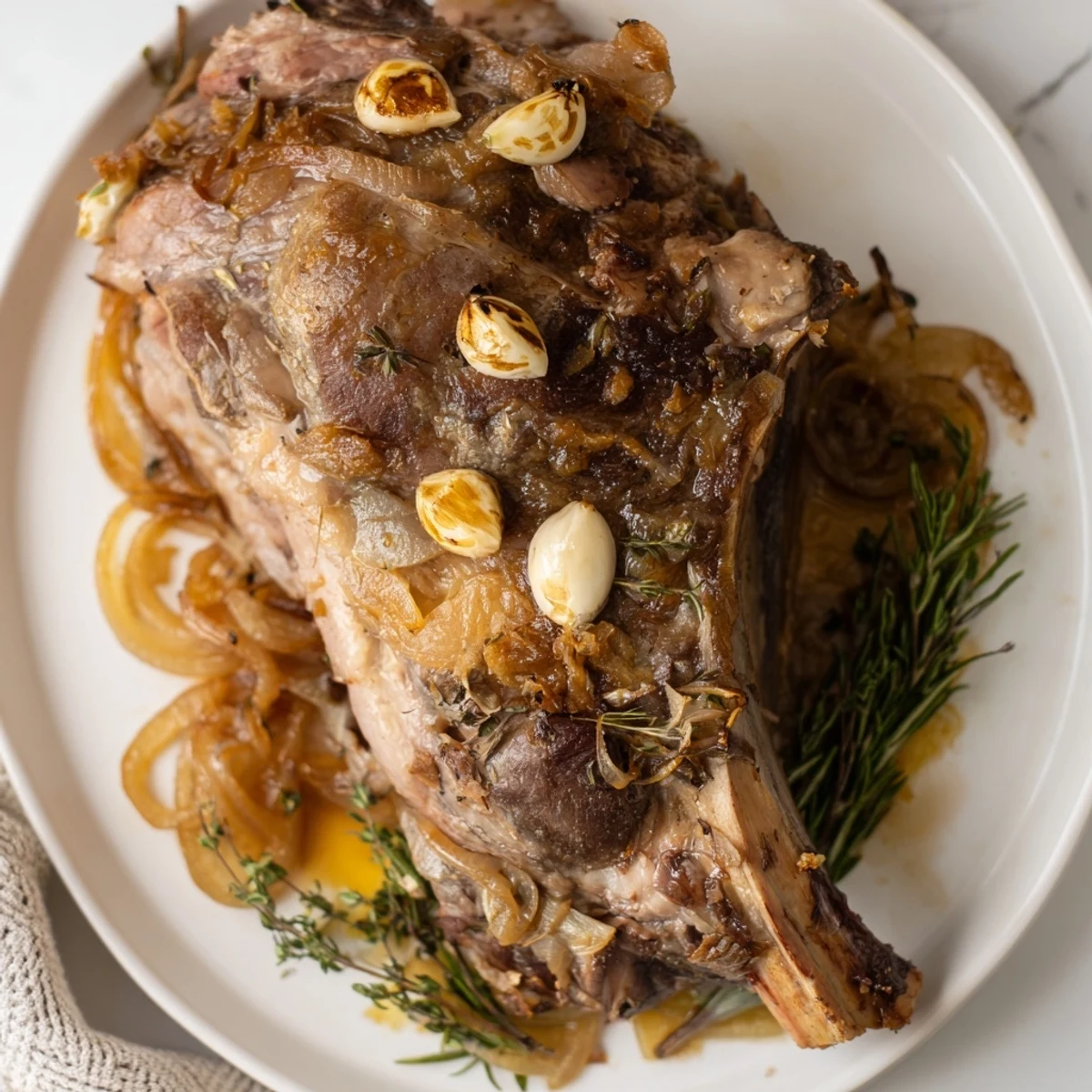
 This slow cooked lamb shoulder offers tender, fall-off-the-bone meat infused with aromatic garlic and fragrant herbs. The preparation involves rubbing the lamb with olive oil, salt, and pepper, then inserting garlic cloves directly into the meat. Roasted slowly with fresh rosemary, thyme, and bay leaves in a blend of white wine and stock, the lamb develops deep flavors and a rich texture. Optional vegetables like carrots, parsnips, and baby potatoes can be added midway for a hearty accompaniment. Finishing with a high-heat brown elevates the dish’s savory succulence.
Perfect for a comforting Mediterranean main course, this method highlights layering of flavors and uses a slow roasting technique to ensure tenderness and aromatic depth. Resting the meat before serving allows juices to redistribute for maximum moistness.
I pulled this lamb from the oven on a cold Sunday last March, and the smell alone brought my neighbor to the door. The garlic had melted into the meat, the rosemary clung to every crevice, and the kitchen windows fogged with steam. That shoulder fed six of us, and no one said much until the plates were clean.
The first time I made this, I forgot to tuck the garlic deep enough into the slits, and half of them burned on the surface. I learned to push them in with my knuckle, right into the fat, where they belong. Now I make sixteen little pockets and fill each one like hiding treasure.
Ingredients
- Bone-in lamb shoulder (2 kg): The bone keeps everything moist and adds body to the sauce, do not trim too much fat or it will dry out.
- Olive oil (2 tbsp): Use good oil here, it coats the skin and helps the salt stick before the long roast.
- Garlic cloves (8, halved): Fresh is everything, old garlic turns bitter under heat.
- Onions (2 large, sliced): They form a sweet, jammy bed that soaks up all the drippings.
- Fresh rosemary and thyme (4 sprigs each): Woody herbs hold up to hours in the oven without turning muddy.
- Bay leaves (2): They add a background hum of warmth, you will miss them if you skip them.
- Dry white wine (250 ml): Something you would drink, not cooking wine from a dusty bottle.
- Stock (250 ml): Low sodium lets you control the salt, beef stock makes it darker and richer.
- Carrots, parsnips, baby potatoes (optional): Add them halfway through so they do not turn to mush, they drink up the sauce beautifully.
Instructions
- Prepare the lamb:
- Pat it completely dry with paper towels, then rub olive oil into every crease and season generously with salt and pepper. Make small deep cuts all over the surface and tuck garlic halves inside, pressing them in with your finger.
- Build the base:
- Lay sliced onions across the bottom of your roasting pan and set the lamb on top. Scatter rosemary, thyme, and bay leaves around the meat, then pour wine and stock into the pan without splashing the lamb.
- Cover and roast low:
- Seal the pan tightly with foil or a lid and slide it into a 160°C oven. Let it go for four hours, the meat will start to pull away from the bone.
- Add vegetables (optional):
- After two hours, lift the foil and nestle carrots, parsnips, and potatoes around the lamb. Re-cover and continue roasting.
- Finish and brown:
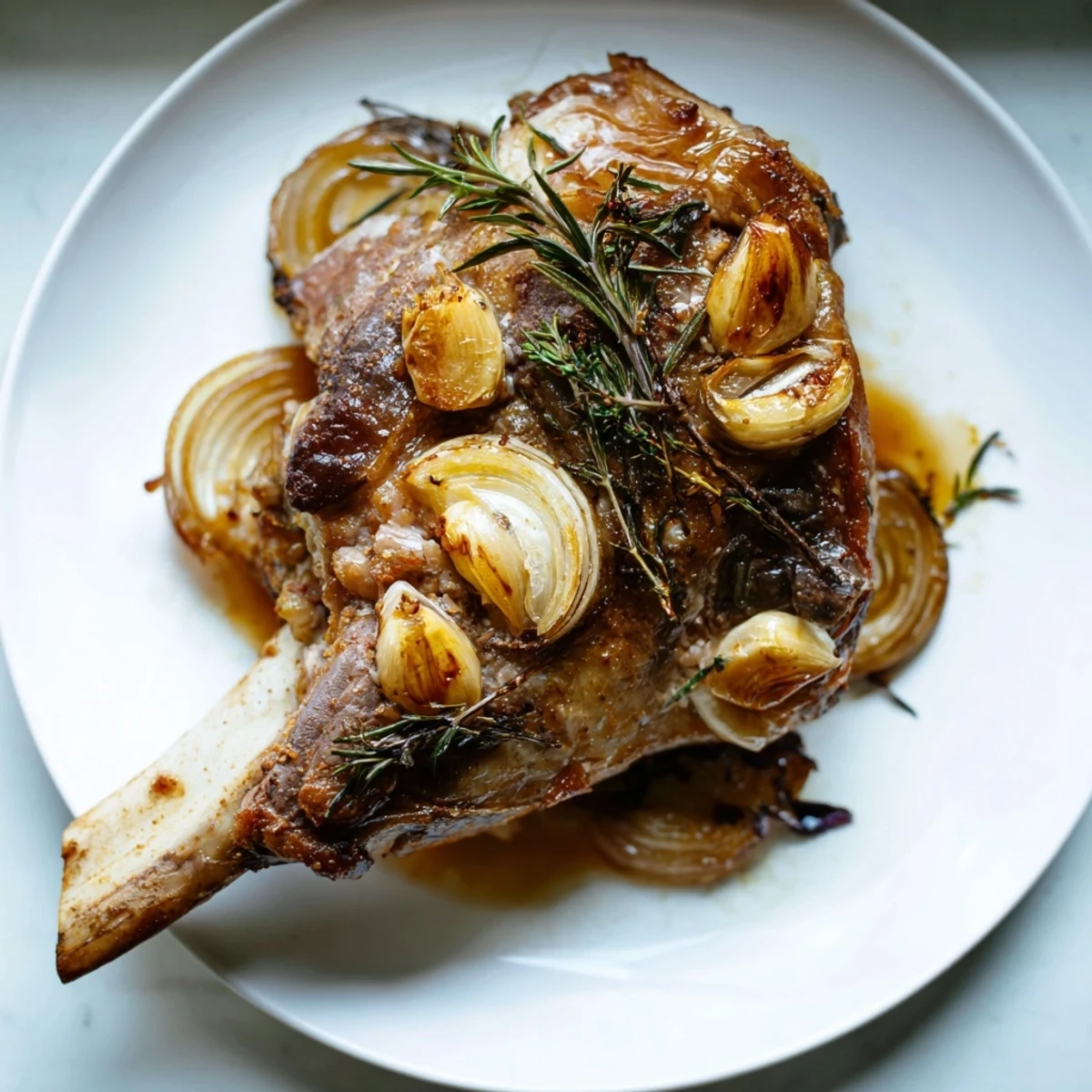
- Remove the foil, crank the heat to 200°C, and roast uncovered for thirty minutes until the top is golden and crisp. Transfer the lamb to a platter and let it rest for fifteen minutes before carving.
 Save to Pinterest
 One evening I served this with nothing but crusty bread and a bowl of the pan juices on the side. My sister tore off chunks of bread, dragged them through the sauce, and said it tasted like the kind of meal you remember years later. She was right.
What to Serve Alongside
I like creamy polenta when I want something that soaks up the sauce without competing for attention. A simple arugula salad with lemon cuts through the richness, and roasted fennel adds a slight sweetness that plays well with the garlic. If you roast the vegetables in the pan, you barely need anything else.
How to Store and Reheat
Leftover lamb keeps in the fridge for three days, tucked into a container with some of the pan juices poured over. Reheat gently in a covered dish at 150°C so it does not dry out. I have also shredded the cold meat and folded it into warm pita with yogurt and herbs, and it tasted like a completely different meal.
A Few Last Thoughts
If you have time the night before, rub the lamb with oil, garlic, and herbs and let it sit uncovered in the fridge. The surface dries out slightly, which means better browning, and the flavors sink in deeper. You can swap the vegetables for whatever is in season, turnips and celeriac work just as well. Do not rush the resting time, patience here is the difference between good and great.
- Use a roasting pan large enough that the vegetables have room to cook evenly.
- Skim the fat from the pan juices before serving, or chill them and lift the solidified fat off the top.
- Pair this with a bold red wine, something that can stand up to the garlic and rosemary.
 Save to Pinterest
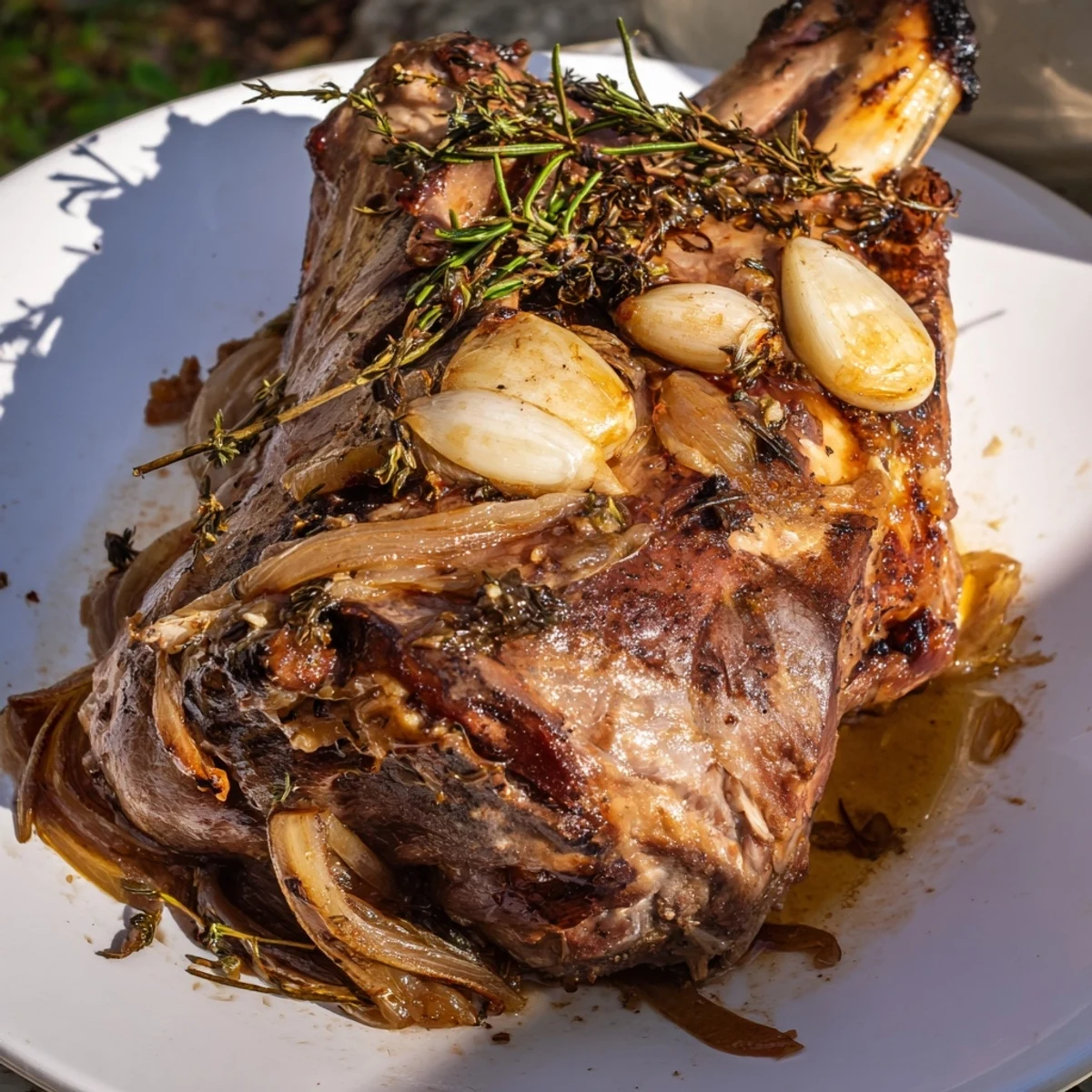
 This lamb does not need much fuss, just time and a little attention at the start and the end. It is the kind of dish that makes your kitchen smell like home and fills the table with something worth gathering around.
Recipe FAQs
- → How do I ensure the lamb stays tender?
-
Slow roasting at a low temperature over several hours helps break down connective tissues, resulting in tender, juicy meat.
- → Can I prepare the dish ahead of time?
-
Yes, marinating the lamb overnight in olive oil, garlic, and herbs enhances flavor and allows easy preparation the next day.
- → What vegetables go well with this dish?
-
Root vegetables like carrots, parsnips, and baby potatoes complement the rich lamb and absorb savory pan juices nicely.
- → How do I get a crispy browned finish on the lamb?
-
Remove the foil after slow roasting and increase oven temperature to roast uncovered for 30 minutes to brown the exterior.
- → What wine pairs best with this dish?
-
Robust red wines such as Syrah or Cabernet Sauvignon enhance the lamb’s rich, savory flavors.