
 Save to Pinterest
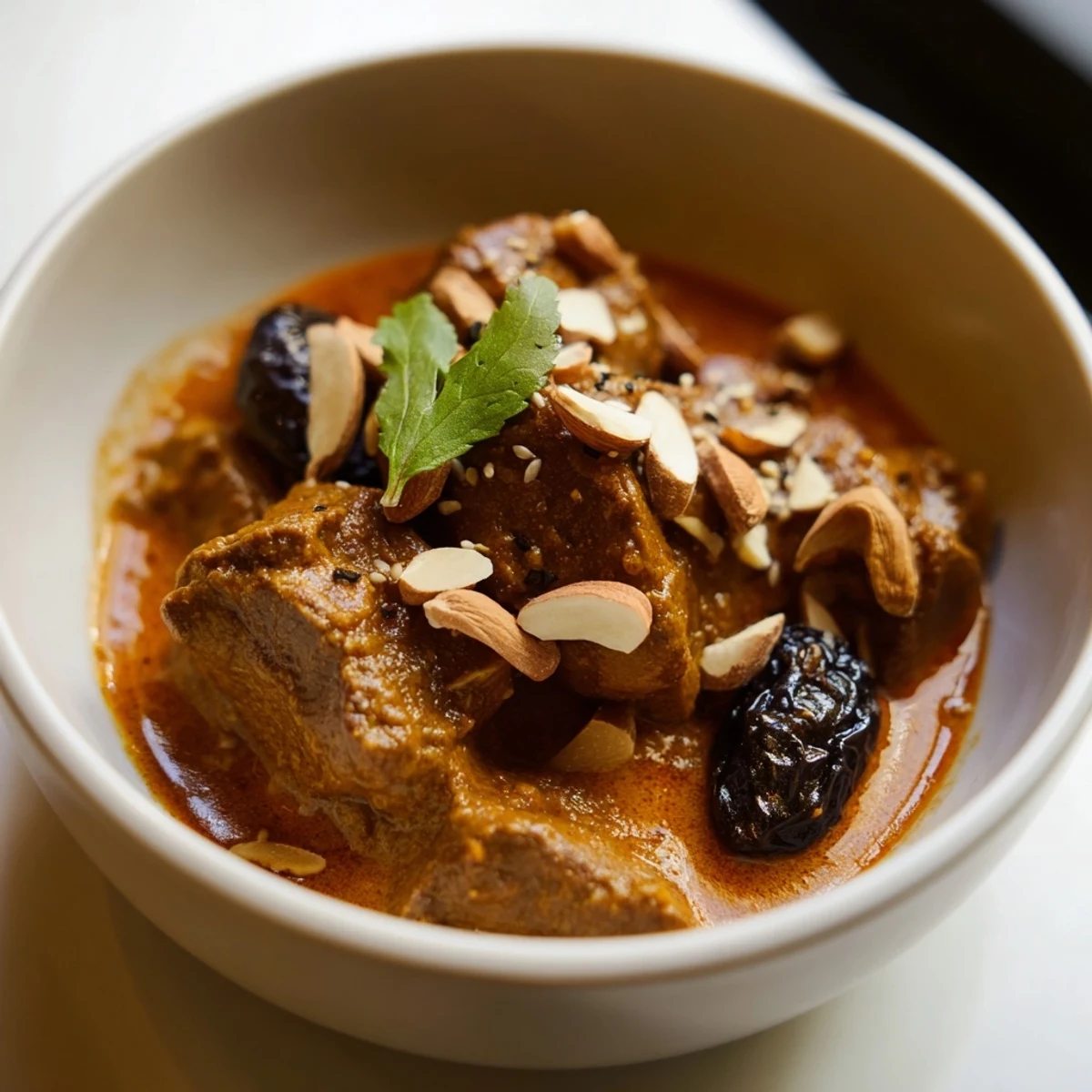
 This dish features lamb shoulder slowly simmered to tender perfection alongside sweet prunes and a blend of warm spices like cumin, coriander, and cinnamon. Aromatic onions, garlic, and fresh ginger build depth, while honey and tomato paste add subtle sweetness and richness. The slow cooking process melds flavors beautifully, resulting in a hearty stew garnished with toasted almonds, sesame seeds, and fresh coriander. Serve with couscous or saffron rice for a satisfying meal.
Years ago, a friend returned from Marrakech with stories of the medina's winding spice stalls and the scent of cinnamon hanging in the air like a spell. She described sitting in a family's home, watching a tagine emerge from a clay pot, steam carrying the aroma of lamb, prunes, and something warm and indefinably Moroccan. I became obsessed with recreating that moment, that feeling, and discovered that slow-cooked lamb tagine wasn't just a dish—it was the closest thing I had to traveling through time and memory with every spoonful.
I made this for my partner on a rainy November evening when we both needed comfort that takeout couldn't deliver. We sat at the kitchen counter watching the pot, and he kept lifting the lid to breathe in the steam, saying nothing. When we finally ate, he asked for seconds before finishing his first bowl, and I knew I'd found something worth making again and again.
Ingredients
- Lamb shoulder, 1.2 kg (2.6 lbs), cut into large cubes: Shoulder has the right balance of fat and meat, becoming impossibly tender during the long braise; ask your butcher to cut them generously so they don't disappear into the sauce.
- Ground cumin, 2 tsp: This is the backbone of the spice blend—earthy and grounding, it makes everything taste authentically Moroccan without overpowering.
- Ground coriander, 2 tsp: Adds brightness and a subtle citrus note that balances the richness of the lamb.
- Ground cinnamon, 1 ½ tsp: The star that makes people pause and ask what they're tasting; this is warmth in a spoon.
- Ground ginger, 1 tsp: Brings heat and complexity, especially when paired with fresh ginger later on.
- Ground turmeric, 1 tsp: The golden color and earthiness that ties everything together.
- Black pepper, ½ tsp: Use freshly ground if you can; pre-ground tastes dusty by comparison.
- Salt, 1 tsp: Season generously at the start so the flavors build throughout cooking.
- Large onions, 2, finely chopped: They'll melt into the sauce and create the savory base that balances the sweet prunes.
- Garlic cloves, 4, minced: Don't skip the fresh garlic after browning the meat; it wakes up the whole dish.
- Fresh ginger, 1 thumb-sized piece, grated: This lifts the spiced lamb to something more alive and present than dried ginger alone can do.
- Beef or lamb stock, 400 ml (1 ⅔ cups): Use homemade if you have it, or good-quality store-bought; weak stock will leave the sauce thin and disappointing.
- Tomato paste, 2 tbsp: Adds umami depth and helps thicken the sauce as it reduces.
- Honey, 2 tbsp runny: Sweet but not cloying, it plays beautifully against the spices and the prunes' natural sugar.
- Olive oil, 2 tbsp: For browning the meat and cooking the aromatics; good oil makes a subtle but real difference.
- Pitted prunes, 250 g (9 oz): These plump up and become jewel-like, their sweetness cutting through the savory lamb and spices perfectly.
- Blanched almonds, 50 g (1.7 oz), toasted: Adds texture and a nutty richness that feels luxurious; toasting them brings out their flavor completely.
- Sesame seeds, 2 tbsp, toasted: The final garnish that catches the light and adds a subtle nuttiness and crunch.
- Fresh coriander (cilantro) leaves, to serve: A bright, herbaceous finish that prevents the dish from feeling too heavy.
Instructions
- Season and marinate the lamb:
- In a large bowl, combine your lamb cubes with cumin, coriander, cinnamon, ground ginger, turmeric, black pepper, and salt, tossing until each piece is coated in spices. If you have time, let it sit overnight in the refrigerator—the flavors will deepen and marry into the meat, making the final dish infinitely more complex.
- Brown the lamb in batches:
- Heat olive oil in your pot over medium-high heat until it shimmers, then add lamb in batches, resisting the urge to crowd the pan. Let each piece develop a dark, caramelized crust (about 3-4 minutes per side) before transferring to a plate; this isn't just flavor, it's the foundation of everything that comes next.
- Soften the aromatics:
- In the same pot, add your chopped onions and let them cook gently for 6-8 minutes until they turn golden and soft, then add minced garlic and grated fresh ginger, cooking just until fragrant. You'll smell the shift in your kitchen—suddenly it smells like somewhere warm and spiced.
- Build the sauce:
- Return the browned lamb to the pot, then stir in tomato paste and honey, mixing until everything is glossy and coated. This step transforms the pot from just ingredients into something cohesive and intentional.
- Add liquid and simmer:
- Pour in your stock, scraping up all the browned bits stuck to the bottom of the pot (those bits are pure flavor), then bring everything to a gentle simmer. Cover, reduce heat to low, and let it cook undisturbed for 1 hour 30 minutes, stirring occasionally to prevent sticking.
- Finish with the prunes:
- After 90 minutes, add your prunes and continue cooking uncovered for another 45-60 minutes until the lamb is so tender it falls apart with a spoon and the sauce has thickened to something glossy and rich. Taste and adjust salt and spices as needed—be brave here, the flavors should sing.
- Garnish and serve:
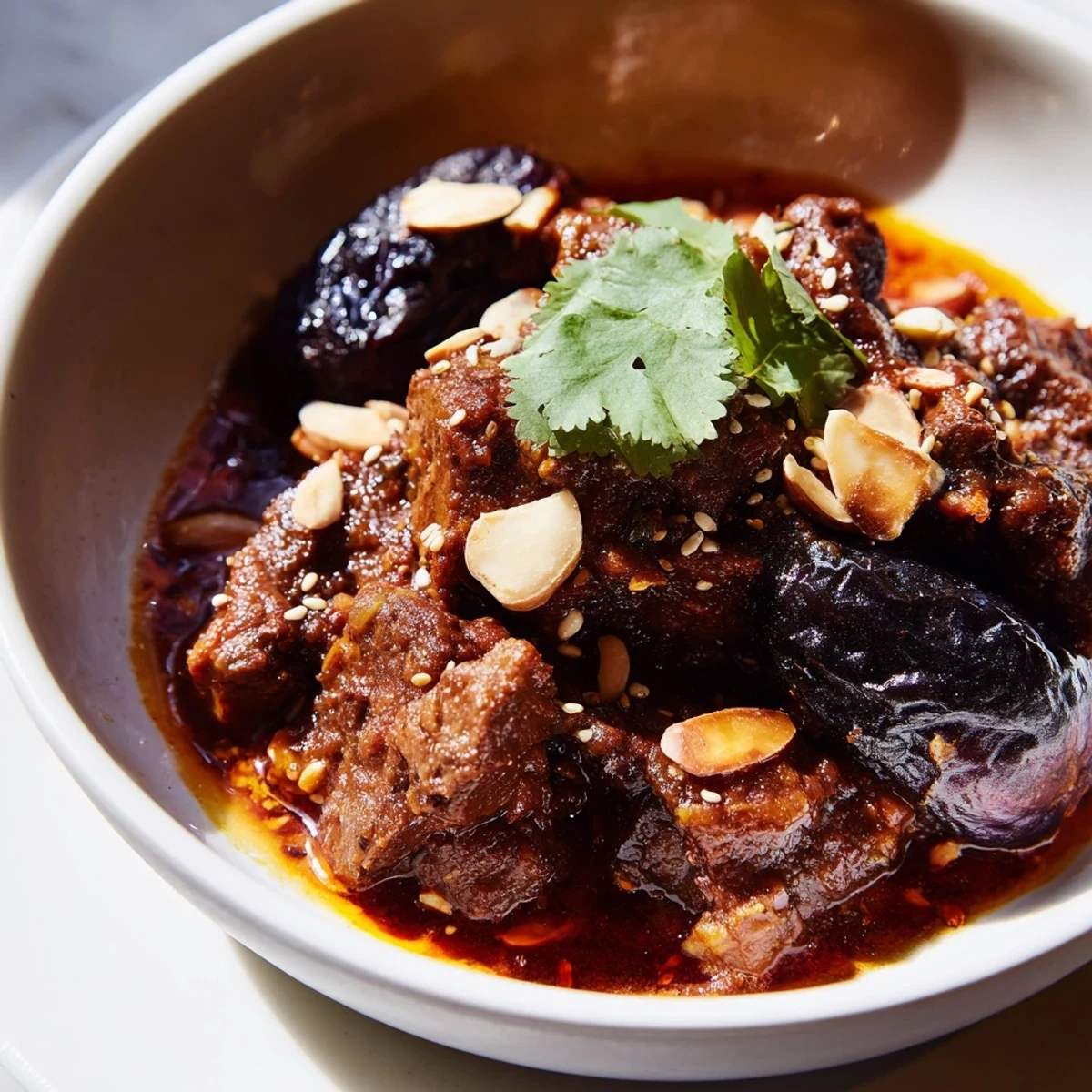
- Serve hot in bowls, scattered with toasted almonds, sesame seeds, and fresh coriander; the contrast of temperatures and textures is as important as the flavors themselves.
 Save to Pinterest
 There's a moment, about two hours in, when your kitchen stops smelling like separate ingredients and starts smelling like an entire country—that's when you know it's working. My mother tasted this once and closed her eyes, and I realized then that food is memory made edible, and this dish holds all of it.
Why This Works as a Tagine
A tagine isn't just a method; it's a philosophy of cooking that values patience and layering. The slow, gentle heat allows the spices to bloom into the meat rather than dominate it, and the long braise transforms tougher cuts into something silken and luxurious. If you own an actual clay tagine, use it—the conical lid collects condensation and recirculates it back into the food, creating an almost supernatural tenderness. If you don't, a heavy-bottomed pot with a lid works beautifully and will deliver nearly the same result.
Serving and Pairing Ideas
Couscous is the traditional companion, and for good reason—its subtle flavor and light texture provide a perfect canvas for the tagine's richness without competing. Saffron rice offers a more luxurious route, adding its own golden warmth to the plate. For drinks, a fruity red wine like Grenache echoes the prunes, or abandon wine entirely and serve Moroccan mint tea, which clears your palate and feels authentic in a way that little else can.
Variations and Flexibility
This recipe is forgiving in the way great dishes often are—it bends without breaking. Swap dried apricots for prunes if you prefer something more tart, or use a combination of both for complexity. For a milder version that doesn't announce itself to sensitive palates, reduce the cinnamon and ginger slightly, or omit them entirely and add them at the table so each person can control their spice level. The prunes are your sweetness anchor, so don't skip them completely, but you might adjust how many you use based on your taste.
- A splash of pomegranate molasses adds tartness that cuts through the richness beautifully.
- Substitute venison or beef shoulder if lamb isn't your preference.
- Make it a day ahead; the flavors deepen overnight and the dish reheats without any loss of quality.
 Save to Pinterest
 This tagine feels like home, like someone knew exactly what you needed and cooked it for hours so the flavors would meld into something you couldn't forget. Make it, and it becomes yours.