
 Save to Pinterest
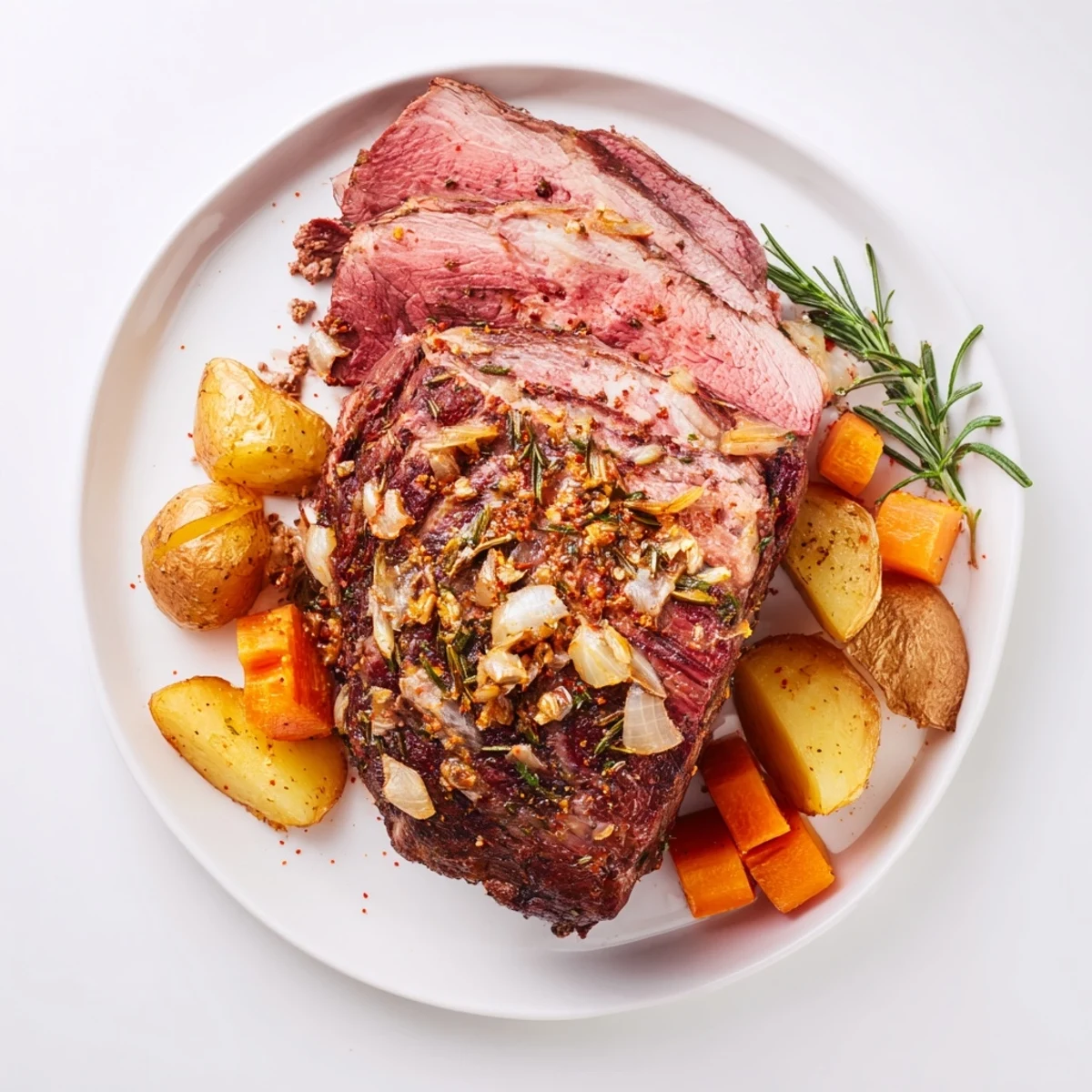
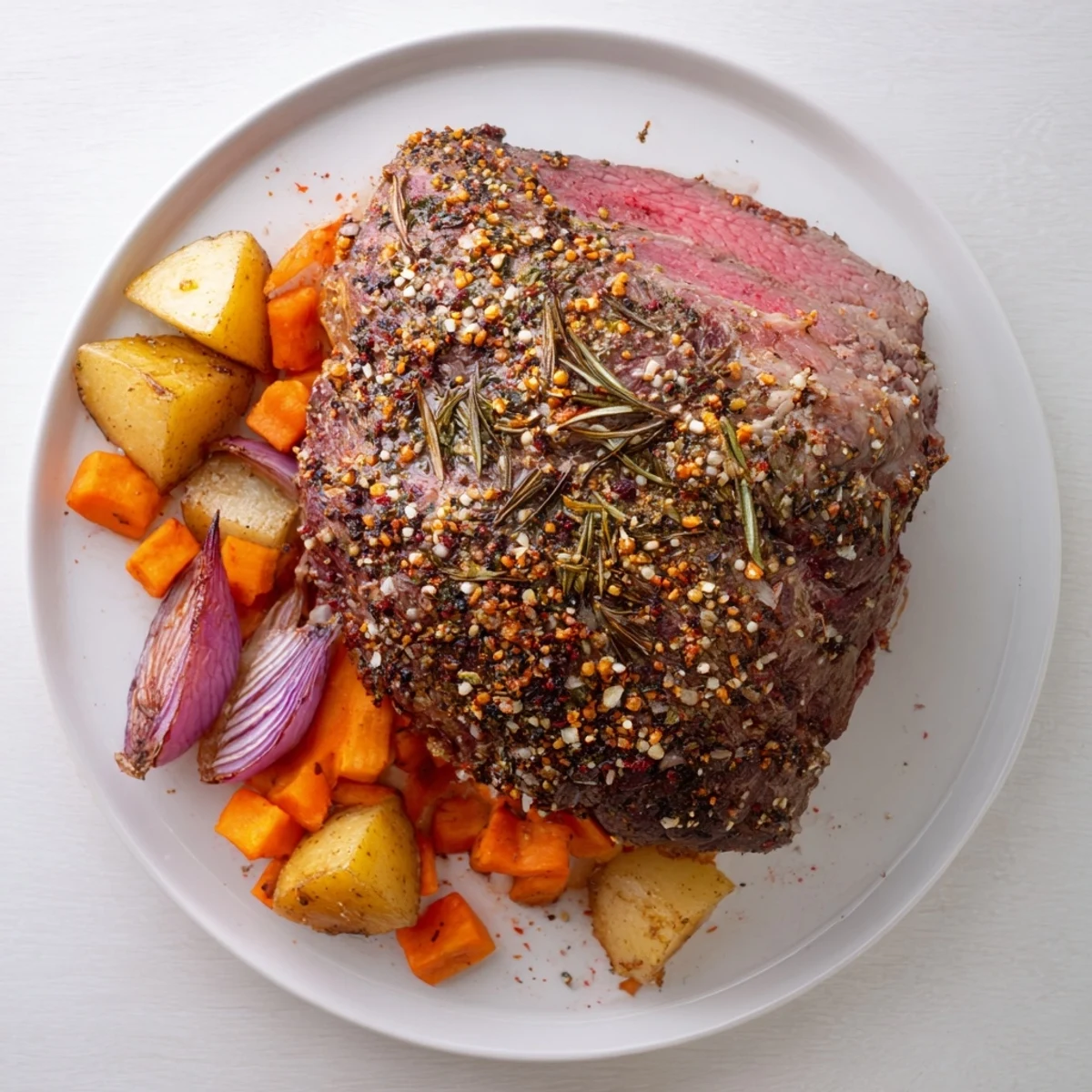
 This dish features a tender beef roast seasoned with garlic, rosemary, thyme, and smoked paprika. It’s roasted alongside carrots, onions, and potatoes, creating a flavorful centerpiece with a crisp, golden exterior and juicy interior. Preparation requires oiling and rubbing the meat with herbs and spices, followed by careful roasting at a controlled temperature to achieve perfect doneness. Resting the meat before slicing allows the juices to redistribute, resulting in a moist finish. Ideal for gatherings, this flavorful, gluten-free dish pairs well with robust red wines or savory sauces.
There's something almost ceremonial about pulling a perfectly roasted beef from the oven—that moment when the kitchen fills with the smell of caramelized meat and herb-infused smoke. My uncle taught me this recipe years ago during a winter holiday, not with a fancy writeup but by simply handing me a thermometer and saying, watch it, trust your nose. I've made it dozens of times since, and every time someone takes that first bite, their eyes light up the same way.
I once made this for a dinner party where I was nervous about everything going wrong, so naturally I set a timer for the oven and then promptly forgot about it for the entire appetizer course. When I finally remembered and checked, I thought I'd ruined it—but that extra five minutes of heat had darkened the crust to pure mahogany. My friend took one bite and asked if I'd always been doing it that way on purpose.
Ingredients
- Beef roast (1.5 kg / 3.3 lbs): Sirloin, ribeye, or rump all work beautifully; choose one with visible marbling for juicier results.
- Olive oil (3 tbsp): The oil carries the seasoning paste and helps create that golden crust, so don't skip it or use cooking spray.
- Kosher salt (2 tsp) and freshly ground black pepper (1 tsp): Kosher salt's larger crystals dissolve more slowly, seasoning deeper; freshly cracked pepper tastes sharper than pre-ground.
- Garlic cloves (4, minced): Raw garlic will soften into sweet, mellow flavor as it roasts; if you use jarred minced garlic, use less because it's more concentrated.
- Fresh rosemary (2 tbsp) and thyme (1 tbsp): These woody herbs won't burn at high heat like delicate herbs do, but if you only have dried, cut the amounts in half.
- Smoked paprika (1 tsp): The smoke adds a subtle depth that makes people ask what your secret ingredient is—and you get to smile mysteriously.
- Carrots (4 medium), onions (2), potatoes (4 medium): Cut vegetables into similar-sized chunks so they roast evenly; smaller pieces cook faster, larger ones brown better.
Instructions
- Prep your oven:
- Heat to 220°C (425°F) while you get the meat ready; an oven thermometer helps here because oven temperatures can drift without you knowing.
- Dry the roast completely:
- Pat it with paper towels until the surface looks almost dusty—moisture is the enemy of a golden crust.
- Build your flavor paste:
- Stir the oil, salt, pepper, garlic, herbs, and paprika in a small bowl until it looks like wet sand; this is your ticket to flavor that goes all the way through.
- Coat the meat generously:
- Rub the paste all over, getting into any crevices; use your hands and don't be shy about it.
- Arrange the vegetables:
- Scatter carrots, onions, and potatoes in the roasting pan, drizzle lightly with oil, and season with salt and pepper so they're not just background players.
- Position the roast:
- Set it on top of the vegetables or in the center of the pan; the vegetables will steam underneath while the top gets that crust.
- High-heat sear:
- Roast at 220°C for 20 minutes to build that caramelized exterior; you'll hear it start to sizzle after about five minutes.
- Lower and slow-roast:
- Drop the temperature to 180°C and roast for about 1 hour until the internal temperature reaches 55°C (130°F) for medium-rare; insert the thermometer into the thickest part without touching bone, and don't just guess.
- Rest the meat:
- Remove from the oven, loosely tent with foil, and let it sit for 15 minutes so the juices redistribute instead of running all over your cutting board.
- Slice and serve:
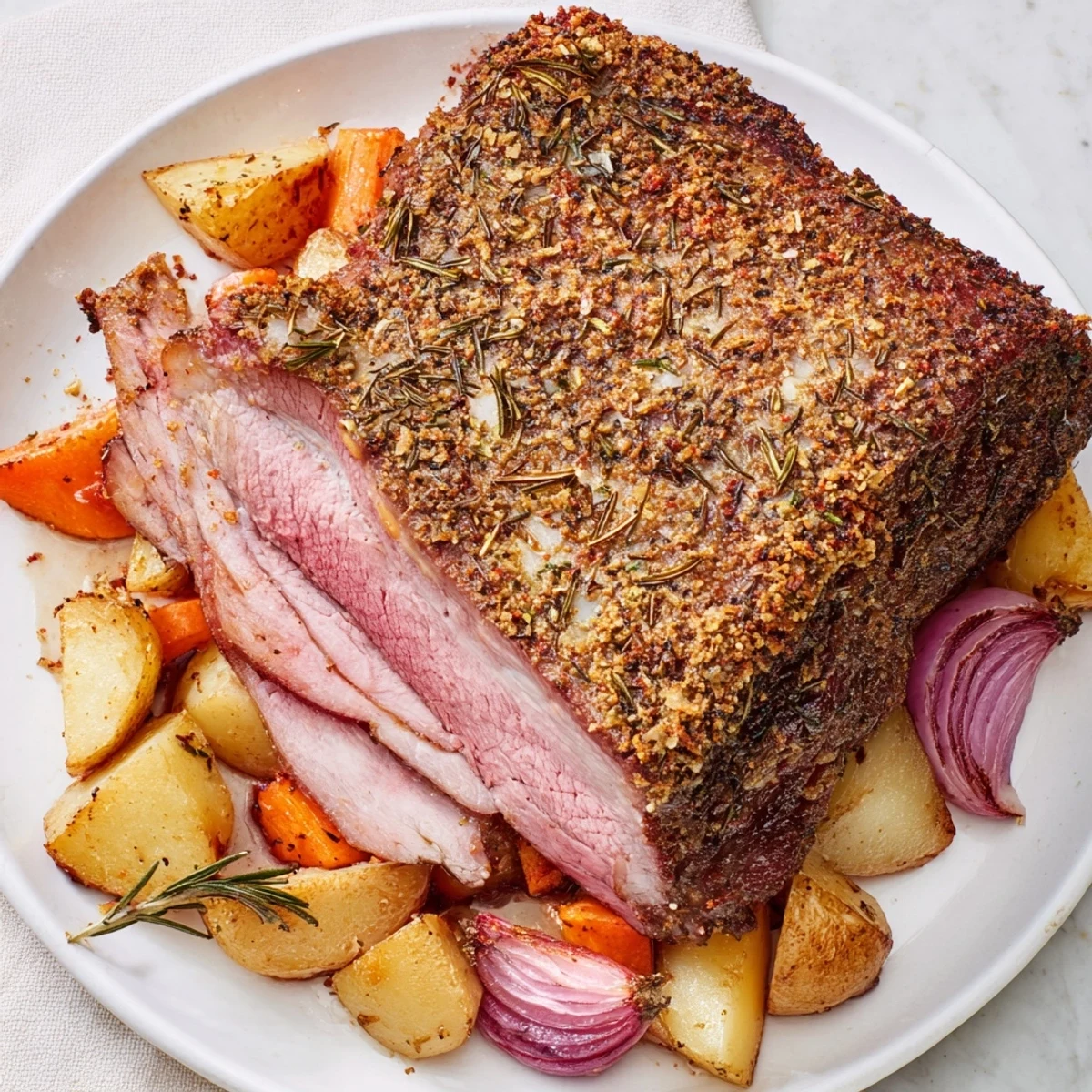
- Use a sharp knife, slice against the grain, and pour those pan juices over everything.
 Save to Pinterest
 I remember my cousin taking a second helping and saying this was the first time she understood why people get excited about Sunday dinner. Sometimes food becomes less about hunger and more about the feeling that someone cared enough to cook something that takes time and attention.
The Magic of the Crust
That dark, nearly charred exterior isn't a mistake—it's called the Maillard reaction, and it's what separates a good roast from one that tastes like boiled beef. The high initial heat is crucial because it browns the surface before the inside has time to overcook. Once you understand that, you stop being afraid of the darkened crust and start celebrating it.
Choosing Your Roast
Different cuts behave differently, and there's no single right answer—it depends on what you like. Sirloin is leaner and cooks faster, ribeye has more marbling so it stays juicy longer, and rump is economical and still delivers great flavor if you don't push the temperature too high. I've used all three, and the main difference is how forgiving they are; a ribeye can handle an extra five minutes of heat and still be soft, while sirloin will get tougher faster.
Vegetables and Pan Gravy
The vegetables aren't just a side dish—they're flavor insurance. As they roast, they release moisture that mingles with the meat drippings, creating a natural gravy you can spoon over everything. If you want something richer, you can deglaze the hot pan with red wine or beef stock after removing the roast, scraping up all the flavorful bits stuck to the bottom.
- Don't skip seasoning the vegetables separately; they need their own salt and pepper to taste like they matter.
- Cut everything to roughly the same size so nothing ends up mushy or raw.
- Root vegetables like potatoes and carrots are your best choice because they actually benefit from the long, slow heat.
 Save to Pinterest
 This dish reminds me that cooking doesn't have to be complicated to be special. A good roast, honest seasonings, and patience—that's almost all you need.
Recipe FAQs
- → What is the best cut of meat to use?
-
Choose cuts like sirloin, ribeye, or rump for tender and juicy results when roasting.
- → Can the cooking time vary?
-
Yes, adjust cooking time based on the roast’s size and your preferred level of doneness.
- → How do I ensure a crisp crust?
-
Start roasting at a high temperature to form a golden crust, then lower the heat to cook through gently.
- → Are there good vegetable options to roast alongside?
-
Carrots, onions, and potatoes complement the meat well and absorb the savory flavors during cooking.
- → Is resting the meat important?
-
Resting allows the juices to redistribute, ensuring a moist and flavorful slice every time.
- → Can I use different herbs for seasoning?
-
Yes, herbs like rosemary, thyme, and smoked paprika can be adjusted to taste or substituted as preferred.