 Save to Pinterest
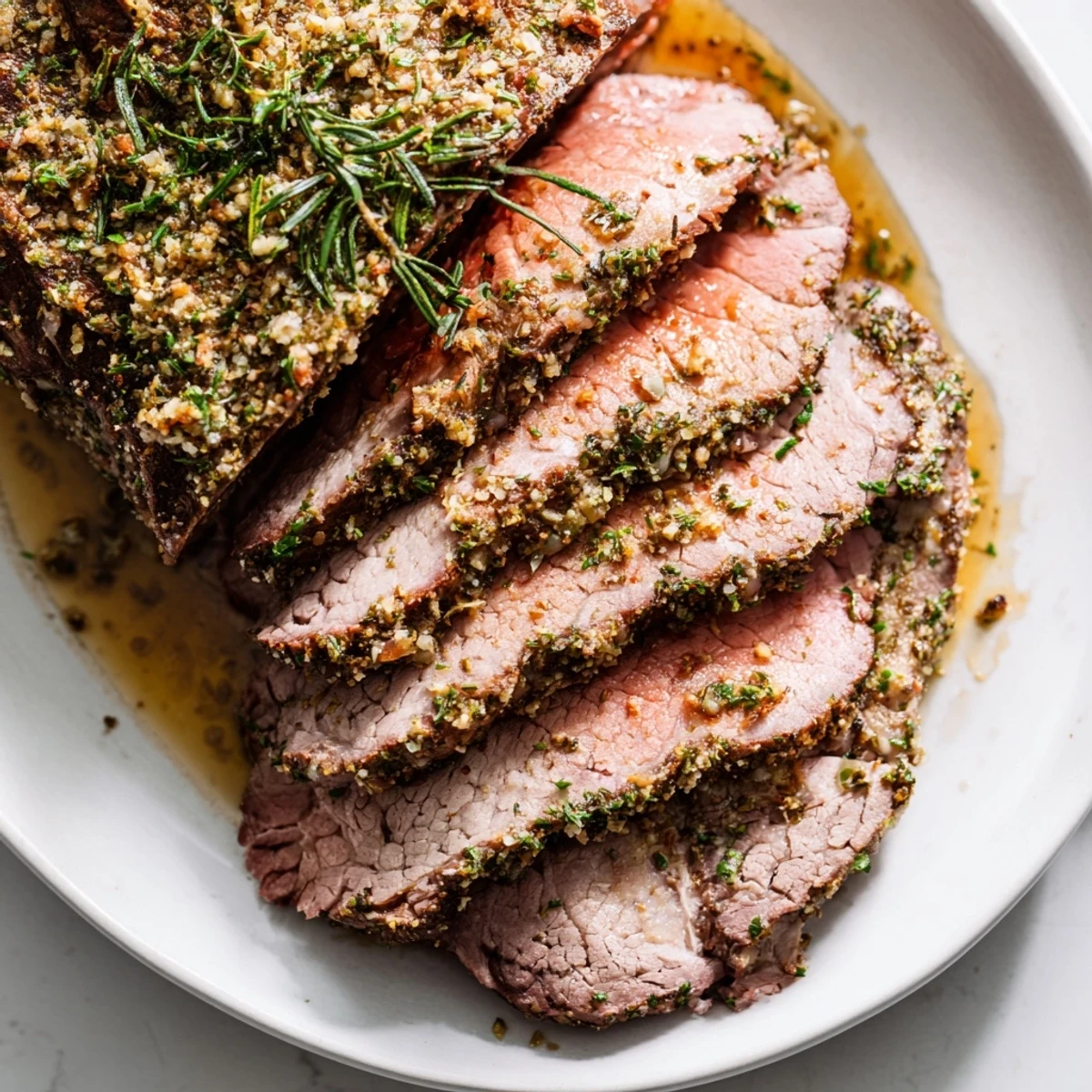
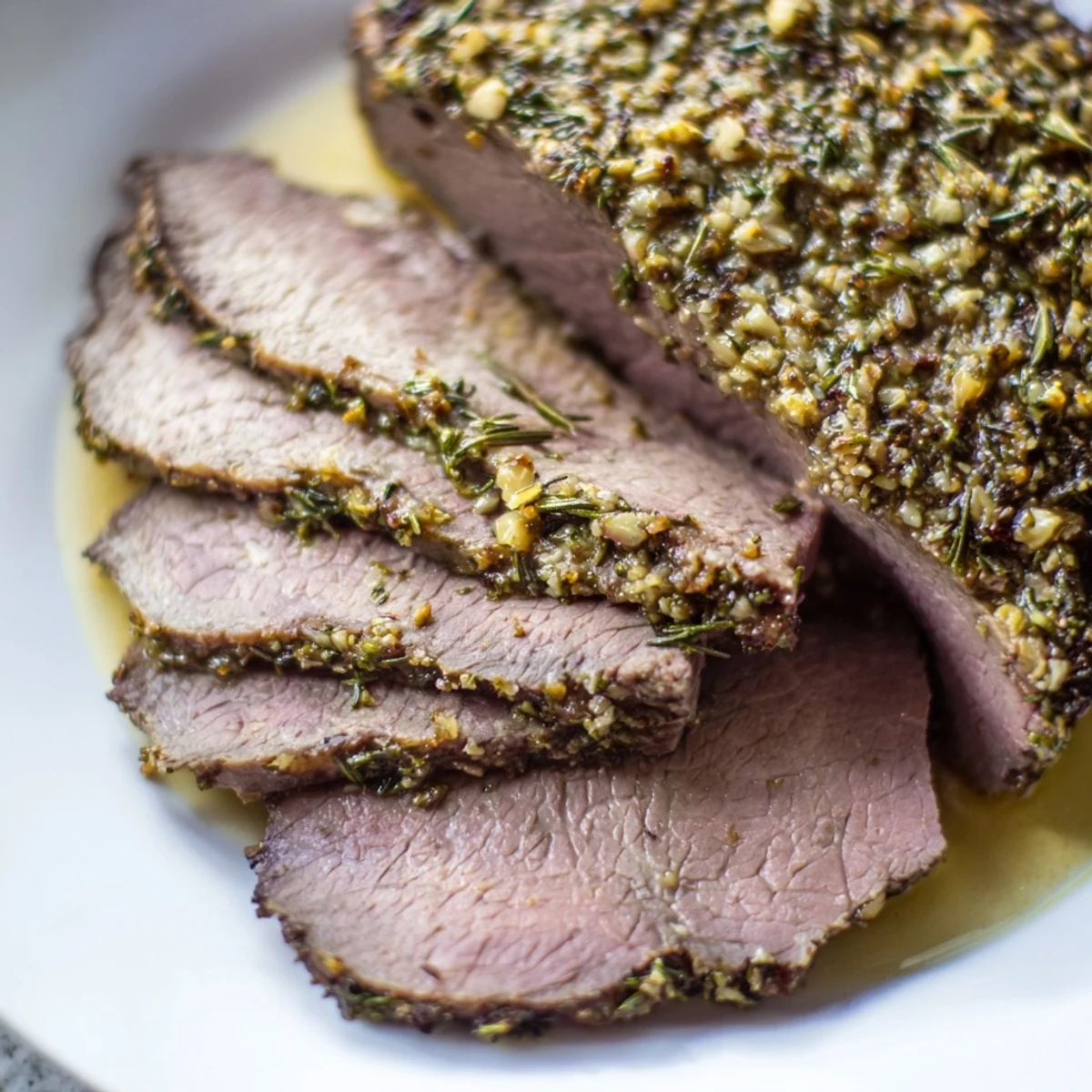
 This herb crusted roast beef topside offers a perfect balance between aromatic herbs and succulent, tender meat. The beef is coated with a mixture of olive oil, Dijon mustard, fresh parsley, rosemary, thyme, garlic, salt, and black pepper, then roasted alongside root vegetables to elevate its natural flavors. Resting after roasting ensures juiciness, delivering a centerpiece worthy of any classic British meal.
There's something almost ceremonial about pulling a beef topside from the fridge on a Sunday morning, knowing it'll be the star of dinner. I learned this recipe years ago when a friend casually mentioned that the key to restaurant-quality roast beef wasn't fancy technique—it was respecting the meat enough to let it come to room temperature first. The fragrant herb crust came later, a discovery born from having leftover fresh herbs and wanting to avoid the usual dry-roast problem. Now whenever I make it, the smell of rosemary and thyme filling the kitchen feels like an accomplishment before I've even taken the first bite.
I made this for my partner's parents on their first visit to our new place, completely terrified I'd mess it up. When I pulled the roast from the oven and that crust was dark golden and crackling at the edges, I felt like I'd actually accomplished something real in the kitchen. The way the meat had stayed pink and juicy inside while the outside was perfectly sealed—that's when I realized this recipe wasn't just delicious, it was reliable in a way that mattered.
Ingredients
- Beef topside roast (1.5 kg): This lean cut is forgiving and cooks evenly, unlike fattier roasts that can feel greasy; make sure it's trimmed but not aggressively.
- Olive oil and Dijon mustard: The mustard does two things—it helps the herbs stick and it adds a subtle tang that cuts through the richness of the meat.
- Fresh parsley, rosemary, and thyme: Dried herbs will taste dusty and forgettable here, so please use fresh; the fragrance matters as much as the flavor.
- Garlic cloves, minced: Four cloves might seem like a lot, but roasting mellows garlic into something sweet and mellow, not harsh.
- Sea salt and black pepper: Finish grinding your pepper just before mixing the crust so it hasn't lost its punch.
- Onion, carrots, and celery: These aren't just vegetables—they become a aromatic platform that keeps the meat elevated above the pan juices, preventing steaming.
Instructions
- Bring the beef to room temperature:
- Remove it from the fridge 30 minutes before cooking and preheat your oven to 200°C (400°F, gas mark 6). Cold meat seizes up in the oven and cooks unevenly; you want it to relax and cook gently.
- Make your herb paste:
- In a small bowl, mix the olive oil, Dijon mustard, all three fresh herbs, minced garlic, sea salt, and pepper until it looks thick and fragrant, almost like wet sand. This is where all your flavor lives.
- Prepare your roasting vessel:
- Pat the beef completely dry with paper towels—moisture is the enemy of browning. Arrange your onion slices, carrots, and celery in the bottom of a roasting tin to create a natural trivet, then set the beef directly on top.
- Apply the herb crust:
- Using your hands (it's the best tool), rub the herb mixture all over the beef, pressing firmly so it clings to the meat rather than sliding off. Don't be shy; every surface should be coated.
- Roast low and slow:
- Start at 200°C for 20 minutes to develop color and seal the exterior, then reduce to 180°C (350°F, gas mark 4) and continue for about 1 hour 10 minutes. Use a meat thermometer to check for 54°C (130°F) for medium-rare or 60°C (140°F) for medium—this is non-negotiable if you want consistent results.
- Rest your masterpiece:
- Remove from the oven, loosely cover with foil, and let it sit undisturbed for at least 20 minutes. This resting period is when the muscle fibers relax and reabsorb the juices; skip it and you'll lose everything you've worked for.
- Slice and serve:
- Carve against the grain with a sharp knife, and drizzle with the pan juices that have been enriched by the vegetables below.
 Save to Pinterest
 The first time the roast came out looking like something from a proper dinner party, my confidence in the kitchen shifted. It taught me that expensive ingredients and fancy techniques matter less than understanding the fundamentals—temperature, timing, and patience—which is oddly freeing.
Building Flavor Beyond the Crust
The vegetables underneath the beef aren't an afterthought; they're absorbing meat juices and creating a flavor base that becomes liquid gold in your pan. I've learned to pay attention to how they caramelize—if they're turning too dark, splash them with a little water to prevent bitterness that will ruin your gravy. The onion softens into almost a jam, which sounds odd until you taste it mixed with the pan drippings.
Temperature and Timing Matter More Than You Think
The initial high heat sears the exterior and creates that crust, but the lower temperature afterward allows the inside to cook gently without the edges becoming leather. This two-stage roasting is the reason you get meat that's pink and tender throughout rather than overdone on the outside and cold in the middle. Meat thermometers have honestly changed my life; I use it every single time because guessing is just stress you don't need.
Serving and Leftovers That Keep Giving
Serve this with roast potatoes and Yorkshire pudding for something genuinely traditional, though roasted vegetables or a simple salad work beautifully too. The next day, thin slices of leftover roast beef between fresh bread with a smear of horseradish cream becomes a lunch you'll actually look forward to.
- If you have wine on hand, add a splash to the roasting tin during the last 15 minutes for pan juices that taste almost restaurant-quality.
- Leftovers stay tender when stored in an airtight container and will keep for three days, getting better as the flavors settle.
- You can always slice extra-thin and serve cold with mustard as an elegant appetizer for unexpected guests.
 Save to Pinterest
 This roast has become my answer to almost every special dinner question—it's reliable, it impresses, and it makes your kitchen smell incredible. Once you've mastered it, you'll be the person everyone wants cooking dinner.
Recipe FAQs
- → How do I prepare the herb crust?
-
Mix olive oil, Dijon mustard, chopped parsley, rosemary, thyme, minced garlic, salt, and black pepper into a smooth paste to coat the beef evenly.
- → What internal temperature should the beef reach?
-
For medium-rare, aim for 54°C (130°F); medium can be achieved at 60°C (140°F) using a meat thermometer.
- → Can I add vegetables for roasting?
-
Yes, placing thickly sliced onion, chopped carrots, and celery sticks in the roasting tin forms a flavorful base and adds aroma to the roast.
- → How long should the beef rest after roasting?
-
Rest the beef loosely covered with foil for at least 20 minutes to allow juices to redistribute for tenderness.
- → How can I enhance the pan juices?
-
Adding a splash of red wine to the roasting tin during cooking enriches the pan juices with deeper flavor.