
 Save to Pinterest
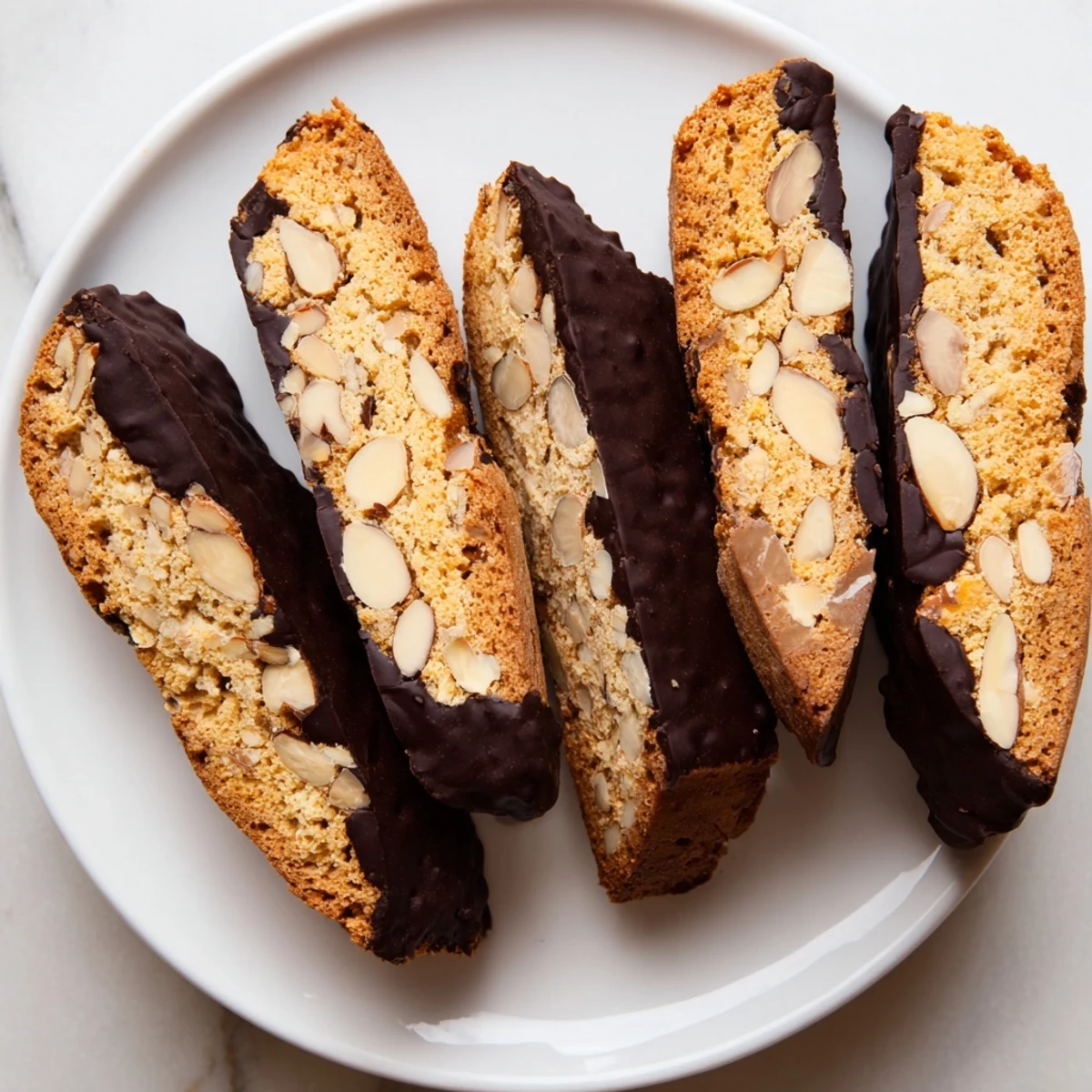
 These crisp, twice-baked biscotti combine the crunch of toasted almonds with the smooth richness of dark chocolate. The dough is carefully crafted with vanilla and almond extracts, baked twice to achieve a perfect, dry crispness ideal for dipping into coffee or enjoying as a snack. Finished by dipping one end in melted chocolate, the biscotti offer a balance of nutty texture and decadent flavor. They keep well when stored airtight and can be customized by adding zest or substituting nuts.
I remember the first time I made biscotti was on a quiet Sunday afternoon when my grandmother mentioned she missed the Italian cookies from her childhood. I found myself drawn to this recipe because it promised something special—twice-baked cookies with an elegant chocolate finish that felt both sophisticated and deeply comforting. That first batch came out of the oven crackling with promise, and the moment I dipped them in melted dark chocolate, I understood why these humble cookies had become a treasure in Italian kitchens for generations.
What really cemented my love for this recipe was the morning my neighbor stopped by unexpectedly with her two children. I pulled out a few biscotti I'd made days earlier, dunked them in coffee, and watched their faces light up with that pure joy that only a perfect cookie paired with a warm beverage can bring. That's when I realized biscotti isn't just a cookie—it's an edible invitation to sit down and connect.
Ingredients
- All-purpose flour (2 cups/250 g): The foundation that gives biscotti its structure without being heavy. I reach for a quality all-purpose flour because it creates that tender crumb beneath the crispy exterior.
- Granulated sugar (1 cup/200 g): This sweetens the dough and helps create those golden, caramelized edges during baking. Measure it by weight if possible for consistency.
- Baking powder (1 1/2 tsp): Just enough to give the dough a gentle lift without making it cake-like. Don't skip this—it makes all the difference in texture.
- Salt (1/4 tsp): A pinch that makes everything taste more like itself, especially important with the almond flavor.
- Large eggs (3): These bind everything together and add richness. Room temperature eggs mix more evenly into the dough.
- Pure vanilla extract (1 tsp): I always reach for pure over imitation because the flavor is cleaner and more sophisticated.
- Almond extract (1/2 tsp): This is the secret whisper in the background—use it sparingly because a little goes a long way, but omit it and something feels missing.
- Whole almonds, toasted and coarsely chopped (1 cup/140 g): Toasting them first unlocks their flavor and prevents them from tasting raw. Chop them unevenly for texture variation that makes each bite interesting.
- Dark chocolate, chopped (6 oz/170 g, 60–70% cacao): The final touch that ties everything together. This percentage balances bitterness with sweetness without being overwhelming.
Instructions
- Get Everything Ready:
- Preheat your oven to 350°F (175°C) and line a baking sheet with parchment paper. If your almonds aren't already toasted, spread them on a baking sheet and roast them for about 8 minutes until fragrant—you'll notice the difference immediately in the final flavor.
- Mix the Dry Foundation:
- In a large bowl, whisk together the flour, sugar, baking powder, and salt. This step is crucial because it distributes the leavening evenly, preventing dense pockets in your finished biscotti. You should hear the dry ingredients whisking together smoothly.
- Combine the Wet Ingredients:
- In a separate bowl, beat the eggs, vanilla extract, and almond extract until everything is combined. Don't overbeat—just until you see no streaks of egg white remaining.
- Bring It Together:
- Pour the wet mixture into the dry ingredients and stir until mostly incorporated. The dough will look shaggy at first, and that's exactly right. Don't overmix or you'll develop too much gluten and the cookies will be tough.
- Fold In the Almonds:
- Gently fold in your toasted, chopped almonds until they're evenly distributed. You should see little flecks of almond throughout when you lift the spoon.
- Shape Into Logs:
- Divide the dough in half. With floured hands, shape each half into a log about 12 inches long and 2 inches wide. The dough will be slightly sticky—that's normal. Flour your hands generously and work quickly. Place the logs on your prepared baking sheet with space between them because they'll spread slightly as they bake.
- The First Bake—Creating Structure:
- Bake for 25–28 minutes until the logs are lightly golden and set when you gently press the top. They should feel firm but still slightly soft. You're not trying to crisp them yet—that comes next.
- Cool and Prepare for Slicing:
- Remove from the oven and let the logs cool for 10 minutes. This brief rest makes them firm enough to slice cleanly without crumbling. While they cool, reduce your oven temperature to 300°F (150°C).
- The Cut That Changes Everything:
- Using a serrated knife with a gentle sawing motion, slice the logs diagonally into 1/2-inch thick pieces. Diagonal slices aren't just pretty—they create more surface area, which means more crispy edges for dunking. A serrated knife prevents the logs from compressing as you cut.
- The Second Bake—Creating Crispness:
- Arrange the sliced biscotti cut side down on the baking sheet. Bake for 12 minutes, then flip each piece and bake another 10–12 minutes until they're golden brown and completely crisp. You'll notice they become drier and lighter, almost weightless in your hand. This is the magic of twice-baking.
- Cool Completely:
- Transfer the finished biscotti to a wire rack and let them cool completely. This is important because they'll continue to crisp as they cool. Resist the urge to eat them warm—they'll shatter rather than provide that satisfying crunch.
- Melt the Chocolate:
- Place chopped dark chocolate in a heatproof bowl set over a pot of simmering water (double boiler method), or microwave it in 20-second intervals, stirring after each interval. The microwave is faster, but the double boiler method prevents accidental scorching. Stir until smooth and glossy.
- The Final Touch—Dipping:
- Hold each biscotto by one end and dip the other end into the melted chocolate, letting the excess drip off back into the bowl. Rotate it slightly as you dip to ensure even coverage. Place dipped biscotti on a fresh sheet of parchment paper and let the chocolate set completely at room temperature. If you want chocolate to set faster, you can refrigerate them for 10 minutes.
 Save to Pinterest
 The moment I truly understood biscotti's magic was when my mother-in-law sat at my kitchen table with a cup of tea, dunked a chocolate-dipped cookie, and her eyes closed in that particular way that happens when food triggers a cherished memory. She told me it tasted like her childhood in Tuscany, and suddenly this recipe became more than technique—it became a bridge across time and geography, a small way to honor her story.
Keeping It Fresh
Biscotti are built to last, which is part of their charm. Once completely cooled and the chocolate has set, store them in an airtight container at room temperature for up to two weeks. I keep mine in a glass jar on the counter where I can see them—partly because they look beautiful, but also because having them visible means they actually get eaten and enjoyed rather than forgotten in a cupboard. If you live somewhere particularly humid, add a silica gel packet to the container to keep them extra crispy.
Flavor Variations That Clicked
While the original recipe is perfect as written, I've discovered some variations that have become favorites in their own right. Adding one teaspoon of orange zest to the dough creates a subtle brightness that plays beautifully against the chocolate. If almonds aren't your preference, hazelnuts or pistachios work wonderfully—each brings its own character to the cookie. You can even mix nuts if you're feeling adventurous, or add a pinch of cinnamon or cardamom for warmth. The foundation is flexible enough to accommodate your preferences while maintaining that essential twice-baked texture.
Gift-Giving and Sharing Ideas
One of my favorite things about homemade biscotti is how beautifully they travel and store, making them ideal for gifts. I arrange them standing upright in a clear cellophane bag tied with twine, and they look like something from a fancy bakery. They're substantial enough to feel like a real gift but humble enough not to feel presumptuous. I've also learned to double recipes when company is coming because people inevitably ask if they can take extras home.
- Pack them in a single layer separated by parchment paper if gifting to prevent chocolate smudges, and include a note suggesting they dunk them in coffee or tea for the best experience
- They're perfect for cookie exchanges because they ship well and stay fresh without requiring refrigeration, unlike many homemade cookies
- One final thought as you're settling into enjoying these—remember that the best biscotti are the ones you share, so don't hide them away in a cupboard waiting for a special occasion
 Save to Pinterest
 Biscotti remind me that some of the best things in life take patience and a second bake to become their best selves. Make these cookies, share them generously, and you'll understand why they've been treasured across generations.
Recipe FAQs
- → What makes biscotti crisp and crunchy?
-
Biscotti get their crispness from the twice-baking process, which dries the cookies out thoroughly, resulting in their signature crunch.
- → Can I use other nuts instead of almonds?
-
Yes, hazelnuts or pistachios can be used to provide a different but equally delightful nutty flavor.
- → How do I melt chocolate for dipping without burning it?
-
Melt chocolate gently using a double boiler or microwave in short intervals, stirring often until smooth.
- → What is the role of almond extract in the dough?
-
Almond extract enhances the nutty aroma and depth of flavor complementing the toasted almonds.
- → How should biscotti be stored to maintain freshness?
-
Store biscotti in an airtight container at room temperature to keep them crisp for up to two weeks.